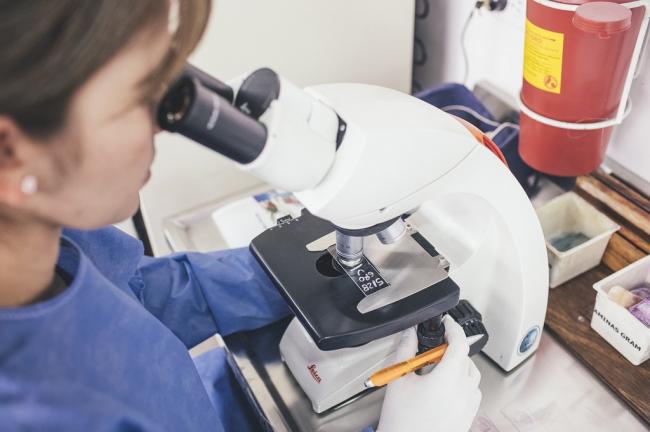
Antibiotic resistance is ‘crisis we cannot ignore,’ UN warns, calling for responsible use of these medicines
New York, Nov 14(Just Earth News): As World Antibiotic Awareness Week began on Monday, the United Nations, through its Food and Agriculture Organization (FAO), the World Health Organization (WHO) and the World Organisation for Animal Health (OIE), called for responsible use of antibiotics in humans and animals to reduce the emergence of antibiotic resistance.
As World Antibiotic Awareness Week began on Monday, the United Nations, through its Food and Agriculture Organization (FAO), the World Health Organization (WHO) and the World Organisation for Animal Health (OIE), called for responsible use of antibiotics in humans and animals to reduce the emergence of antibiotic resistance.
“Antibiotic resistance is a global crisis that we cannot ignore,” said Tedros Adhanom Ghebreyesus, Director-General of WHO. “If we don’t tackle this threat with strong, coordinated action, antimicrobial resistance will take us back to a time when people feared common infections and risked their lives from minor surgery."
Antibiotic resistance is rising to dangerously high levels in all parts of the world and threatening our ability to treat common infectious diseases. Infections affecting people – including pneumonia, tuberculosis, blood poisoning and gonorrhoea – and animals alike are becoming harder, and sometimes impossible, to treat as antibiotics become less effective.
“FAO advocates for the implementation of good practices in terrestrial and aquatic production and health systems,” said Kundhavi Kadiresan, the UN agency’s Assistant Director-General and Regional Representative for Asia and the Pacific, as she formally opened the Week’s celebrations in the region.
This year’s theme is to seek advice from a qualified healthcare professional before taking antibiotics. For food and agriculture, this means that one of the best ways to tackle AMR is to diminish the need of antimicrobials at farm settings through the promotion of good practices in livestock production, aquaculture farming and crop production.
“[These] are practical steps that would promote prudent use of antimicrobials in the region,” explained Kadiresan.
To tackle these problems, WHO, FAO and OIE are leveraging their expertise and working together in a ‘One Health’ approach to promote best practices to reduce the emergence and spread of antibiotic-resistant microbes in both humans and animals.
“The overuse of antimicrobials blunts their effectiveness, and we must reduce their misuse in food systems,” said José Graziano da Silva, Director-General of FAO. “Antimicrobial veterinary medicines are a crucial tool for animal health and welfare and safe food production, but they are by no means the only tool.”
“Like in human health, veterinary medicine has tremendously progressed thanks to antibiotics. Preserving their efficacy and availability through their responsible use associated with good husbandry and prevention practices, is therefore essential to preserve animal health and welfare,” highlighted Dr. Monique Eloit, Director-General of OIE.
Photo: PAHO/Joshua Cogan
Source: www.justearthnews.com
Support Our Journalism
We cannot do without you.. your contribution supports unbiased journalism
IBNS is not driven by any ism- not wokeism, not racism, not skewed secularism, not hyper right-wing or left liberal ideals, nor by any hardline religious beliefs or hyper nationalism. We want to serve you good old objective news, as they are. We do not judge or preach. We let people decide for themselves. We only try to present factual and well-sourced news.
Support objective journalism for a small contribution.