Ancient crops to be deposited in Norway's Arctic seed vault for future generations - UN
“In a few decades, our planet’s food systems will need to feed an additional 2 billion people,”said José Graziano da Silva, Director-General of the UN Food and Agriculture Organization (FAO), adding that “producing more and more nutritious food will be made all the more challenging as a result of climate change.”
750 potato seeds, as well as other wild potato relatives, were deposited by representatives of indigenous Andean communities from Peru, scientists from Costa Rica, FAO and Norwegian officials at the Svalbard Global Seed Vault in the Arctic Circle.
The potato, originated in the Andes of South America, is now the world’s third-most consumed food. Feeding over 1 billion people every day, the potato is low in fat with high protein, calcium and vitamin C.
However, climate change, agricultural modernization, land-use changes, and diseases such as potato blight pose a critical challenge to this precious natural resource.
“Agricultural biodiversity – like that locked inside the potato seeds being deposited here today – is essential to facing these challenges, by helping us develop better, more resilient crops,” said Mr. da Silva.
These seeds are made possible through benefit-sharing projects supported by FAO’s International Treaty on Plant Genetic Resources for Food and Agriculture. It aims to ensure farmers and researchers accessible to a large diversity of seeds and other plant genetic material - and a fair share of the benefits resulting from any new varieties.
Thanks to the Treaty, the Andean farmers learned how to pollinate their potatoes and collect seeds for storage, with some being deposited in Svalbard today.
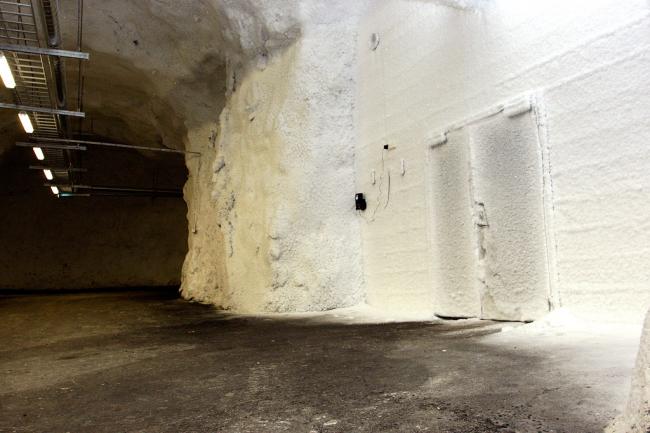
Svalbard Global Seed Vault, currently holding over 860,000 food crop seeds from all over the world, is a back-up facility in the permafrost far north of the Arctic Circle. Co-funded by the Global Crop Diversity Trust, its mission is to conserve the planet's crop diversity for the food security of current and future generations, and the Government of Norway.
UN Photo/Mark Garten
Support Our Journalism
We cannot do without you.. your contribution supports unbiased journalism
IBNS is not driven by any ism- not wokeism, not racism, not skewed secularism, not hyper right-wing or left liberal ideals, nor by any hardline religious beliefs or hyper nationalism. We want to serve you good old objective news, as they are. We do not judge or preach. We let people decide for themselves. We only try to present factual and well-sourced news.
Support objective journalism for a small contribution.