Ahead of Brazil Summit, UN reports 3 million people now have access to hepatitis C cure
New York, Oct 31(Just Earth News): A record 3 million people obtained treatment for hepatitis C over the past two years, and 2.8 million more people embarked on lifelong treatment for hepatitis B in 2016, the United Nations health agency reported Tuesday, the eve of the World Hepatitis Summit in Brazil, highlighting increasing momentum in the global response to the viral disease.
“These results bring hope that the elimination of hepatitis can and will become a reality,” said Gottfried Hirnschall, Director of the World Health Organization's (WHO) Department of HIV and Global Hepatitis Programme, in a news release, citing a nearly 5-fold increase in the number of countries developing national plans to eliminate life-threatening viral hepatitis over the last 5 years.
Co-organized by WHO and the World Hepatitis Alliance and to be attended by over 900 delegates from more than 100 countries, the Summit aims to encourage more countries to take decisive action to tackle hepatitis, which still causes more than 1.3 million deaths every year and affects more than 325 million people.
Progress in treatment and cure
Many countries are demonstrating strong political leadership, facilitating dramatic price reductions in hepatitis medicines, including through the use of generic medicines – which allow better access for more people within a short time.
In 2016, 1.76 million people were newly treated for hepatitis C, a significant increase from 1.1 million people in 2015. The 2.8 million additional people starting lifelong treatment for hepatitis B in 2016 was a marked increase from the 1.7 million people in 2015.
But these milestones represent only initial steps – access to treatment must be increased globally if the 80 per cent treatment target is to be reached by 2030.
Diagnosis challenge and prevention gaps
To achieve rapid scale-up of treatment, countries need urgently to increase uptake of testing and diagnosis for hepatitis B and C. As of 2015, an estimated 1 in 10 people living with hepatitis B, and 1 in 5 people living with hepatitis C, were aware of their infection.
“We cannot meet the ambitious hepatitis elimination targets without innovation in prevention interventions and approaches, and implementing them to scale,” said Ren Minghui, Assistant Director-General for Communicable Diseases at WHO.
New tools required include a functional cure for hepatitis B infection and the development of more effective point-of-care diagnostic tools for both hepatitis B and C.
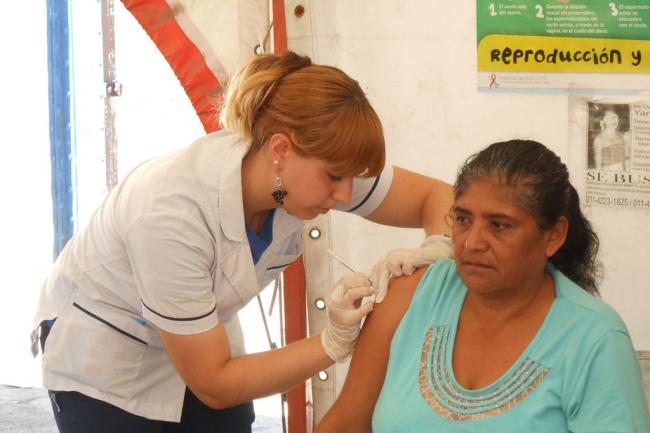
Photo: WHO/PAHO
Source: www.justearthnews.com
Support Our Journalism
We cannot do without you.. your contribution supports unbiased journalism
IBNS is not driven by any ism- not wokeism, not racism, not skewed secularism, not hyper right-wing or left liberal ideals, nor by any hardline religious beliefs or hyper nationalism. We want to serve you good old objective news, as they are. We do not judge or preach. We let people decide for themselves. We only try to present factual and well-sourced news.
Support objective journalism for a small contribution.