Africa's rapid urbanization can drive industrialization, says new UN report
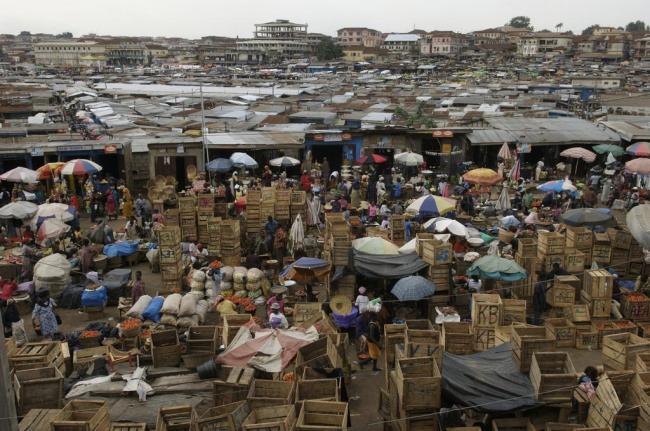
“African urbanization has not been driven by improving agricultural productivity or increased industrial output, as has been the case elsewhere,” said Giovanie Biha, the Deputy Executive Secretary of the UN Economic Commission for Africa (ECA) during the launch of the 2017 Economic Report on Africa by the ECA Sub-Regional Office for Eastern Africa in Kigali (SRO-EA).
“On the contrary,” she added, “it has been dominated by the expansion of the informal sector – often services. To foster enhanced growth and poverty eradication, African countries should put in place industrial policies that will generate the skilled jobs and productivity gains needed for the structural transformation of their economies.”
Pointing out that by 2035, half of the continent's population will be urban, compared to just one third in 1990, 'Industrialization and Urbanization for Africa's Transformation' also provides an opportunity to discuss the challenges of industrialization and structural transformation on the continent and for Eastern Africa, in particular.
In most of the 14 countries covered by the Sub-Regional Office, the share of the manufacturing sector has been stagnant or declining over the past ten years while the services sector has expanded rapidly.
Despite a weak structural transformation process, the long-term growth outlook remains promising in Eastern Africa.
According to the ECA report, the gross domestic product (GDP) growth rate in 2017 is estimated to remain at the 2016 level of 5.6 per cent – down from the exceptional performance of the past five years. Ethiopia's average annual growth rate is 9.5 per cent and Rwanda's 7.2 per cent between 2012 and 2016, remaining well above the African continent average of 3.1 per cent in 2017.
While Andrew Mold, Acting Director of the SRO-EA, highlighted some growth catalysts, such as massive investments in infrastructure or service sectors, increased investments have started to stretch budgets and weaken structural constraints, such as exchange rate volatility.
Photo: Jonathan Ernst/World Bank (file)
Source: www.justearthnews.com
Support Our Journalism
We cannot do without you.. your contribution supports unbiased journalism
IBNS is not driven by any ism- not wokeism, not racism, not skewed secularism, not hyper right-wing or left liberal ideals, nor by any hardline religious beliefs or hyper nationalism. We want to serve you good old objective news, as they are. We do not judge or preach. We let people decide for themselves. We only try to present factual and well-sourced news.
Support objective journalism for a small contribution.