Africa one step closer to polio eradication, but more work to be done: UN
Observing Tuesday the one year mark since the last case of wild polio was confirmed on the African continent, the world body has recalled that despite such laudatory progress, the milestone could not yet be considered “official” by the Organization’s strict standards.
Nigeria, the last endemic country in the African region, marked one year without a case of wild polio on 24 July 2015.
If continued lab results in the coming weeks confirm no new cases in Nigeria, and if the UN World Health Organization (WHO) African Region then goes two more years without a case of wild polio in the face of strong surveillance, it could be certified polio-free by the Africa Regional Certification Commission.
Similarly, transmission in Kenya and Ethiopia has also been interrupted.
“Globally, we are on the verge of totally eradicating a disease for only the second time in history,” remarked Peter Crowley, the head of the UN Children Fund’s (UNICEF) Polio unit, on his blog.
He added, “As we approach the General Assembly’s endorsement of the Sustainable Development Goals, what a wonderful time to be able to encourage the global community to set ambitious goals and to know that such goals can be met – if we believe.”
According to the UN, African leadership has been instrumental in reaching the milestone and pushing towards wider eradication through the African "Kick Polio out of Africa" campaign.
Likewise, the support of the international community has also been key to success and continued support remains essential to achieve a polio-free Africa through improved vaccination campaign quality and surveillance, particularly in the Horn and Central Africa.
“With Africa now on track, we are left with only two countries where polio transmission has never been interrupted: Pakistan and Afghanistan,” Crowley continued.
He said, “Here too, despite enormous challenges, communities, governments and partners are working with courage and determination to end polio once and for all.”
Polio is a virus transmitted by person-to-person contact and spread mainly through the faecal-oral route or, less frequently, by a common vehicle (e.g. contaminated water or food) and multiplies in the intestine, from where it can invade the nervous system and can cause paralysis.
Initial symptoms of polio include fever, fatigue, headache, vomiting, stiffness in the neck, and pain in the limbs. In a small proportion of cases, the disease causes paralysis, which is often permanent. There is no cure for polio, it can only be prevented by immunization.
If eradication in Africa is achieved, there would be only two countries where polio transmission has never been interrupted: Pakistan and Afghanistan.
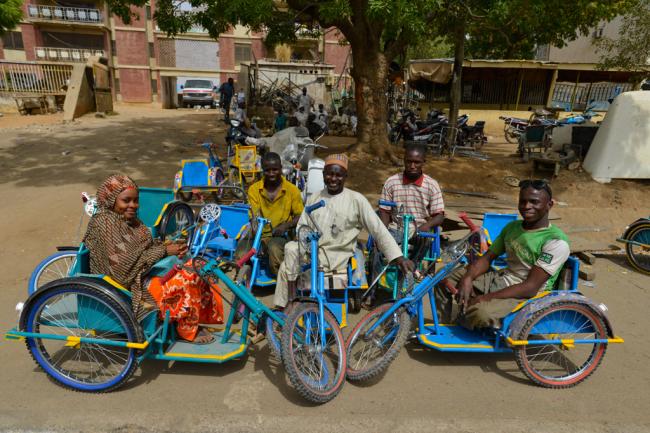
Photo: UNICEF/Sebastian Rich
Support Our Journalism
We cannot do without you.. your contribution supports unbiased journalism
IBNS is not driven by any ism- not wokeism, not racism, not skewed secularism, not hyper right-wing or left liberal ideals, nor by any hardline religious beliefs or hyper nationalism. We want to serve you good old objective news, as they are. We do not judge or preach. We let people decide for themselves. We only try to present factual and well-sourced news.
Support objective journalism for a small contribution.