 Iran War
48-hour ultimatum: Trump warns Iran ‘hell will rain down’ over Hormuz blockade
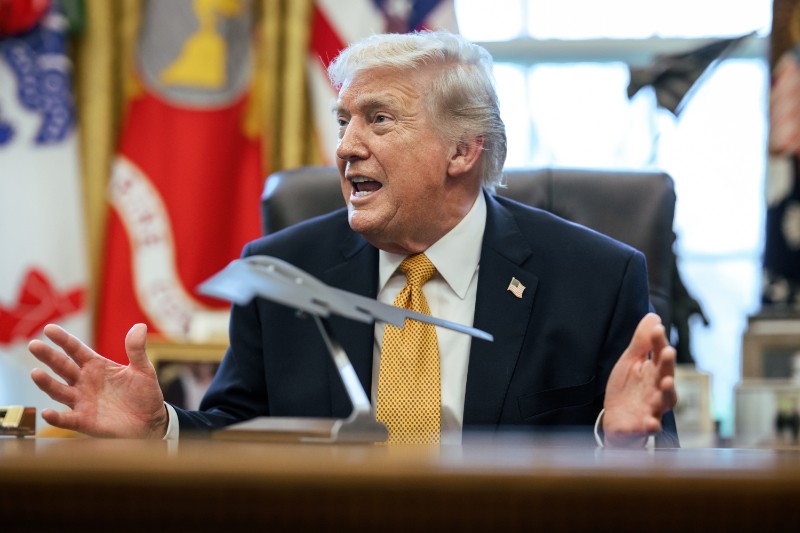
US President Donald Trump has warned Iran that it has 48 hours to comply with his demand to reopen the Strait of Hormuz or face severe consequences.
In a message posted on his social media platform, he reiterated that time was running out for Tehran to act.
“Remember when I gave Iran ten days to MAKE A DEAL or OPEN UP THE HORMUZ STRAIT. Time is running out — 48 hours before all Hell will rain down on them,” Trump said.
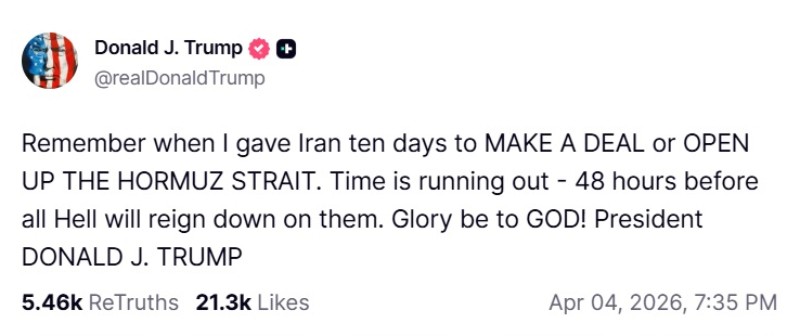
The warning follows an earlier extension of a deadline initially set for Iran to either reach an agreement with Washington or restore navigation through the strategic waterway.
Deadline extension and strategic objectives
Trump had extended the deadline by 10 days, moving it to April 6, after indicating optimism about ongoing diplomatic engagement.
The ultimatum forms part of broader US objectives outlined during the launch of joint operations with Israel earlier this year, which included targeting Iran’s missile capabilities and limiting its naval strength.
The United States has significantly increased its military presence in the region, deploying around 50,000 troops as tensions escalated.
Shifting signals from Washington
Over the course of the conflict, statements from Washington have reflected shifting priorities.
Trump has alternated between describing the conflict as nearing its conclusion and warning of extended military action targeting key infrastructure.
He has also delivered varying messages regarding the Strait of Hormuz, at times suggesting that other nations could take responsibility for reopening it, and at other moments asserting that the United States could manage the task independently.
In earlier remarks, Trump indicated that Iranian energy infrastructure, including power plants and oil facilities, could be targeted if the blockade continues.
He also authorised a temporary pause on strikes against such infrastructure until the revised deadline.
Iran rejects US proposals
Iran has dismissed Washington’s proposals for de-escalation, describing them as “unrealistic, illogical and excessive.”
Officials in Tehran have maintained that the terms presented by the United States amount to a one-sided framework.
Iranian Foreign Minister Seyed Abbas Araghchi stated that Tehran has not refused participation in diplomatic talks, including discussions reportedly facilitated by Pakistan.
He emphasised that any agreement must deliver a definitive and lasting resolution to the conflict.
“We are deeply grateful to Pakistan for its efforts and have never refused to go to Islamabad,” Araghchi said, adding that Iran is focused on achieving a “conclusive and lasting end” to the conflict.
Mediation efforts
Pakistan has played a mediating role since tensions escalated, facilitating communication between Washington and Tehran.
Officials indicated that some progress had been made, although discussions slowed amid uncertainty over Iran’s position.
Reports suggest that both Pakistan and China have encouraged Iran to engage more actively in dialogue, while maintaining contact with Iranian leadership.
Wider implications for global trade
Amid the ongoing standoff, concerns have also extended to other strategic waterways.
Iran’s parliament speaker raised questions about the significance of the Bab el-Mandeb Strait, a critical route linking global shipping traffic to the Suez Canal.
Support Our Journalism
We cannot do without you.. your contribution supports unbiased journalism
IBNS is not driven by any ism- not wokeism, not racism, not skewed secularism, not hyper right-wing or left liberal ideals, nor by any hardline religious beliefs or hyper nationalism. We want to serve you good old objective news, as they are. We do not judge or preach. We let people decide for themselves. We only try to present factual and well-sourced news.
Support objective journalism for a small contribution.