Need for strong links among tourism, culture & local community
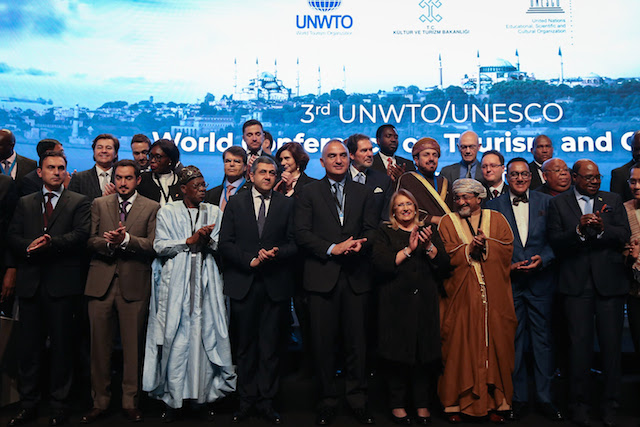
Istanbul, Dec 6 (IBNS): The third cultural tourism conference (3-5 December) organized jointly between the World Tourism Organization (UNWTO) and the United Nations Educational, Scientific and Cultural Organization (UNESCO) concluded here on Wednesday. Participants declared their support for cultural tourism as a driver for safeguarding living heritage, catalyzing creativity in cities, and spreading tourism’s socioeconomic benefits to all.
A key conclusion from the conference was the need for a clear and strong link between tourism, culture and local community stakeholders. Cultural tourism policies and strategies must consider the perspectives and interests of local communities, who can also assist governance bodies in balancing tourism development with heritage conservation and safeguarding. Channelling tourism revenues into cultural preservation and community development was identified as a key governance challenge.
President Marie-Louise Coleiro Preca of Malta addressed the conference at its opening, reinforcing that: “In today’s world, tourism diplomacy is becoming more important to foster understanding, and culture is key to achieving this”.
UNESCO Deputy Director-General Xing Qu affirmed tourism's essential role, stating: “Tourism provides a tremendous opportunity to support local economic development, while breaking down barriers between people. Harnessing creativity and technological innovation, as well as safeguarding heritage is essential for promoting responsible and sustainable tourism to support and unify communities for years to come.”
“Culture is one of the drivers of tourism growth, so protecting cultural heritage and promoting tourism for sustainable development are part of the same equation. That 30-plus ministers from around the world are gathered here proves the place of culture in tourism,” said UNWTO Secretary-General Zurab Pololikashvili opening the event.
These sentiments were echoed by Turkey’s culture and tourism minister Mehmet Ersoy. “The culture and tourism partnership provides a framework for public-private cooperation, education, investments and sustainability,” Minister Ersoy added.
In a debate moderated by the BBC’s Rajan Datar, the more than 30 ministers present concluded that tourism and culture are indivisible and must work together so that tourism does not suffocate cultural heritage and its benefits for visitors and locals. However, the main challenge is to spread cultural tourism’s attractiveness beyond established sites whilst managing large visitor numbers.
The first session of the conference focused on cultural tourism’s potential to help cities transform into more sustainable and creative environments and destinations. It ended in agreement that the creative and cultural sectors can strengthen and provide innovation in cultural tourism, forging links that turn tourism into a tool to safeguard tangible and intangible cultural heritage.
The second day of the event was given over to the twin influence of responsible tourism and technological advances in safeguarding intangible cultural heritage. It was agreed that innovation should be strengthened for better management, promotion and preservation of heritage, as well as to make cultural tourism accessible to all.
During the event, five leading Turkish tourism companies signed the Private Sector Commitment to the UNWTO Global Code of Ethics for Tourism, boosting the efforts of Turkish industry leaders to ensure sustainable development of the sector.
The 3rd UNWTO/UNESCO World Conference on Tourism and Culture will produce a declaration, to be made available soon, outlining the cross-sector commitment of all participants to reinforcing the tourism and culture partnership as an enabler for achieving the 2030 Sustainable Development Agenda of the United Nations. The next edition of the conference is scheduled to take place in Kyoto, Japan in 2019.
Support Our Journalism
We cannot do without you.. your contribution supports unbiased journalism
IBNS is not driven by any ism- not wokeism, not racism, not skewed secularism, not hyper right-wing or left liberal ideals, nor by any hardline religious beliefs or hyper nationalism. We want to serve you good old objective news, as they are. We do not judge or preach. We let people decide for themselves. We only try to present factual and well-sourced news.