

Yemen: UN urges all parties to adhere to international law as civilian toll grows
At least 1,037 civilians, including 130 women and 234 children, lost their lives in Yemen between 26 March and 20 May, while at least another 2,453 civilians have been injured, the Office of the UN High Commissioner for Human Rights (OHCHR) announced today.
“There has also been massive destruction of civilian infrastructure, particularly in Aden and Sada’ah,” Cécile Pouilly, OHCHR spokesperson told reporters in Geneva.
Pouilly said that while the five-day humanitarian pause between 12 May and 17 May provided some respite, there are still reports of ground combat and shelling, and millions remain in need of humanitarian assistance.
Following the pause, violence resumed in Yemen, including airstrikes in Aden, Ibb, Sada’ah, Dhale, and Sana'a. Reports suggest Sada’ah and Sana’a have been most affected by airstrikes while Taiz, Aden and Dhale are witnessing ground fighting.
She drew attention as well to the situation in prisons and rehabilitation facilities in Yemen.
“Many such facilities have been affected by airstrikes or by armed clashes. More than 4,000 inmates have fled while several have been killed or injured,” she added.
Conditions in correctional facilities in Yemen, many of which were chronically poor even prior to the current conflict, have deteriorated considerably.
“The general shortage of food and fuel means that prisoners lack access to sufficient food, electricity, water, proper sanitation facilities and necessary healthcare,” Pouilly said.
There has reportedly been an outbreak of diseases such as scabies and mycosis.
Shortage of fuel has meant that waste management has been severely affected. Inmates have, in many cases, also been deprived of visits from lawyers or family members due to the ongoing conflict.
The OHCHR echoed UN Secretary-General Ban Ki-moon’s call for all sides to engage in the upcoming consultations in Geneva in good faith. It also urged an extension of the humanitarian pause, as a first step towards a permanent ceasefire and an end to all hostilities by all parties to the conflict.
The consultations, set to begin on 28 May in Geneva, will bring together a broad range of Yemeni Governmental and other actors, and follow extensive consultations by Ban’s Special Envoy, Ismail Ould Cheikh Ahmed, together with strong expressions of support by the Security Council in several resolutions seeking a peaceful and Yemeni-led political transition process.
In addition, as many Yemeni parties as possible have been invited and Mr. Ban has urged participants to come without preconditions, according to the UN. The conference was expected to run for four to five days.
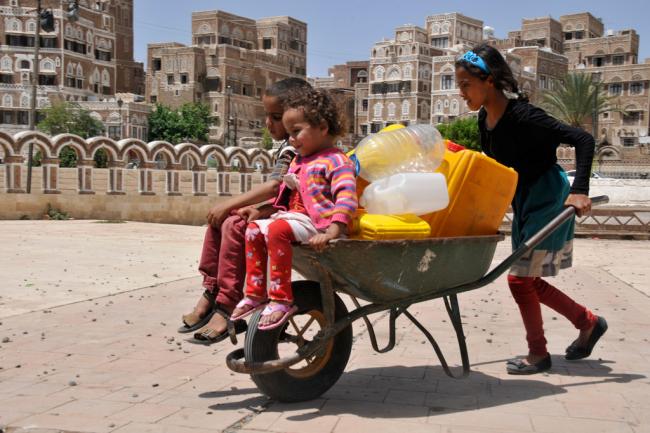
Photo: UNICEF/Mohamed Yasin
Support Our Journalism
We cannot do without you.. your contribution supports unbiased journalism
IBNS is not driven by any ism- not wokeism, not racism, not skewed secularism, not hyper right-wing or left liberal ideals, nor by any hardline religious beliefs or hyper nationalism. We want to serve you good old objective news, as they are. We do not judge or preach. We let people decide for themselves. We only try to present factual and well-sourced news.
Support objective journalism for a small contribution.