


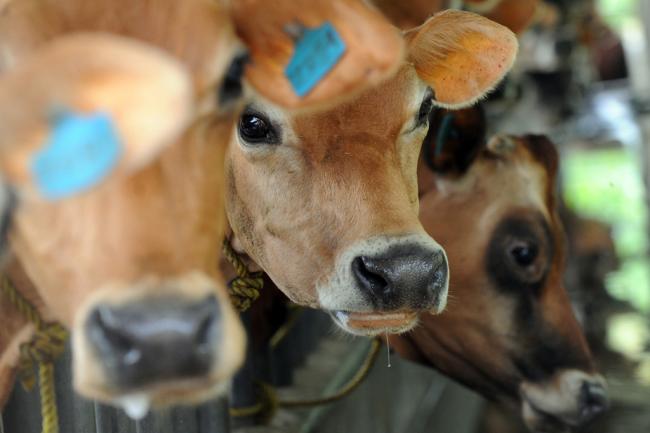
With UN support, more countries confronting threat of drug-resistant 'superbugs'
New York, Nov 17(Just Earth News): Efforts to stem the spread of antimicrobial resistant pathogens on farms and in food systems are gaining strength, thanks to strong backing by governments and technical support from the United Nations to boost national capacities, the Organization's food security and health agencies reported on Friday.
According to the first annual survey conducted by FAO (the Food and Agriculture Organization of the UN), WHO (World Health Organization) and a global intergovernmental body on animal health (World Organization for Animal Health), more than 6.5 billion people – over 90 per cent of the world's population – now live in country that has in place, or is developing a national action plan on antimicrobial resistance (AMR).
“Nearly all of these plans cover both human and animal health in line with the recommended 'one health' multisectoral approach,” said the UN Food and Agriculture Organization (FAO) in a news release announcing the findings.
The report's release comes at the end of World Antibiotic Awareness Week , which kicked off this on Monday 13 November.
Antimicrobial medicines – antibiotics, antifungals, antivirals or antiparasitics – are widely used in livestock, poultry and aquaculture operations to treat or prevent diseases.
However, their over-use and misuse, such as for “promoting growth” is leading to the emergence of microbes resistant to these drugs, making the diseases they cause difficult or in cases, impossible, to treat. Humans exposed to these antimicrobial resistant pathogens are also affected in the same way.
There is progress, but there are also gaps
Since the survey was completed last year (2016), more countries have unveiled plans to tackle A
Yet despite the progress, the global push to address this problem – which is taking epic proportions – is still in its early stages.
“There are weak points that still need to be shored up – particularly in the food and agriculture sectors of low- and middle-income countries, key battlegrounds against 'superbugs' resistant to conventional medicines,” FAO cautioned.
In particular, there are major gaps in data regarding where, how and to what extent antimicrobials are being used in agriculture; also systems and facilities for tracking the occurrence of AMR in food systems and the surrounding environment need to be strengthened.
According to Ren Wang, FAO Assistant Director-General for Agriculture and Consumer Protection, the UN food security agency, along with its partners, is using its expertise and experience to assist developing countries.
“The goal is to help them develop the tools and capacity to implement best practices in animal and crop production, reduce the need for antimicrobials in food systems, develop surveillance capacity to assess the scale of AMR and efforts to control it, and strengthen regulatory frameworks to minimise the misuse of antibiotics while simultaneously ensuring access to drugs for treating sick animals,” he added.
Photo FAO
Source: www.justearthnews.com
Support Our Journalism
We cannot do without you.. your contribution supports unbiased journalism
IBNS is not driven by any ism- not wokeism, not racism, not skewed secularism, not hyper right-wing or left liberal ideals, nor by any hardline religious beliefs or hyper nationalism. We want to serve you good old objective news, as they are. We do not judge or preach. We let people decide for themselves. We only try to present factual and well-sourced news.
Support objective journalism for a small contribution.


