


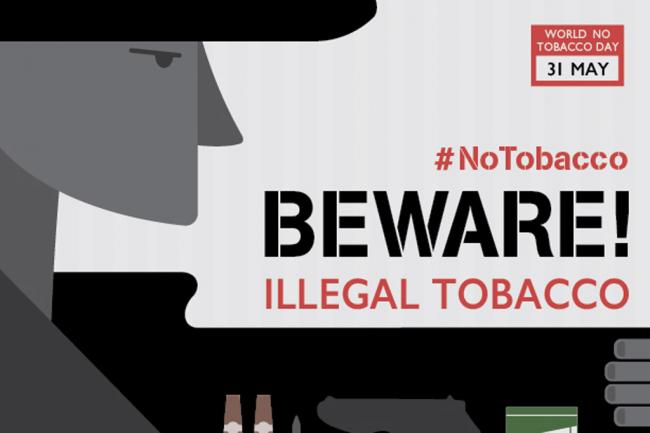
WHO devotes World No Tobacco Day 2015 to combatting illegal tobacco trade
“The tobacco epidemic is one of the world’s biggest-ever public health threats, killing nearly six million people annually,” WHO said in a factsheet on tobacco released on Wednesday.
It said, “Unless urgent action is taken, the annual death toll could rise to more than eight million by 2030.”
And nearly 80 per cent of the world's one billion smokers live in low- and middle-income countries, where the burden of tobacco-related illness and death is heaviest, according to WHO.
WHO went further to warn that tobacco, which caused 100 million deaths in the 20th century, may cause one billion deaths in the 21st century if current trends continue.
Each year, World NO Tobacco Day is marked on 31 May by WHO and its partners to highlight the health risks associated with tobacco use and advocate for effective policies to reduce tobacco consumption.
Because the illicit trade of tobacco products poses major health, economic and security concerns worldwide, WHO has said combatting the illegal tobacco trade is the theme of this year’s Day, which falls on Sunday.
“Illicit trade makes tobacco products more affordable and accessible to people from low income groups, as well as children,” according to the WHO report Illegal trade of tobacco products: what you should know to stop it.
“Illicit tobacco products are typically sold at lower prices, thereby increasing consumption. Tax and price policies are widely recognized as among the most effective means of reducing demand for, and consumption of, tobacco products,” it said.
It also said, “But the illicit trade undermines tax policies, facilitates the uptake of tobacco use by youth and increases health inequalities within the society.”
A key objective of this year’s campaign to advocate for the ratification and implementation by governments of the Protocol to Eliminate the Illicit Trade in Tobacco Products, which is a supplementary treaty to the WHO Framework Convention on Tobacco Control.
The WHO Framework Convention on Tobacco Control entered into force in February 2005. Since then, it has become one of the most widely embraced treaties in the history of the United Nations with 180 Parties covering 90 per cent of the world's population.
Credit: WHO
Support Our Journalism
We cannot do without you.. your contribution supports unbiased journalism
IBNS is not driven by any ism- not wokeism, not racism, not skewed secularism, not hyper right-wing or left liberal ideals, nor by any hardline religious beliefs or hyper nationalism. We want to serve you good old objective news, as they are. We do not judge or preach. We let people decide for themselves. We only try to present factual and well-sourced news.
Support objective journalism for a small contribution.


