


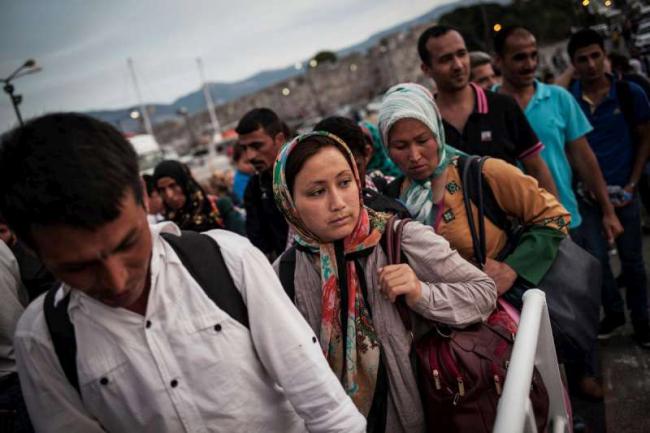
Western Balkans experiencing surge in migrant, refugee crossings: UN agency
Addressing a press conference in Geneva earlier on Friiday, UNHCR spokesperson Adrian Edwards told reporters of a dramatic uptick in the number of men, women and children using the so-called ‘Western Balkans route’ as they seek to reach Western Europe.
Many are also registering for asylum in the Western Balkans – a region which has seen a four-fold increase in the number of asylum-seekers since 2012. In 2015, Edwards added, Serbia alone has seen over 22,000 asylum claims lodged in the first four months of the year.
As migrants and refugees – many of whom originate from refugee-producing countries such as Syria, Afghanistan, Iraq, Eritrea, and Somalia – course across mountain paths and train tracks in order to pierce through the Western Balkans’ borders, they remain dangerously vulnerable to violence, abuse and accidents.
According to UNHCR, many have been also moving through the region irregularly with the help of smugglers, only adding to the dangers to which they are exposed.
Overall, the UN’s official figures show that as of 8 June a total of 103,000 refugees and migrants have arrived in Europe: 54,000 in Italy, 48,000 in Greece, 91 on Malta and 920 in Spain.
The latest tally includes around 6,000 migrants and refugees who were disembarked in southern Italy last weekend in a major rescue operation coordinated by the Italian Coast Guard and joined by navy ships deployed by Frontex and from Italy, Germany, Britain, Ireland, and Spain.
Nevertheless, Edwards warned, a growing number of refugees are accessing Europe via the Western Balkans following a surge in the number of sea arrivals in Greece – the second major front in Southern Europe’s migration crisis.
UNHCR recently reported record numbers of the refugees are arriving in flimsy rubber dinghies and wooden boats on the Greek island of Lesvos, putting an enormous strain on its services and resources.
Half of some 600 refugees, mainly from Syria, Afghanistan and Iraq, who arrive daily in Greece, now come ashore on Lesvos. Arrivals there have grown from 737 in January to 5,000 in April and over 7,200 in May.
Hundreds of refugees leave the island for the Greek mainland every day after being identified, screened and registered.
At present, however, there are around 2,200 to 2,500 waiting there for registration by the authorities. A screening centre in the village of Moria, a former detention centre for migrants waiting to be deported, is currently housing over 1,000 refugees.
The UN agency has long been advocating for improvements to the asylum systems across the Western Balkans and has cautioned that existing capacities remain inadequate for the scale of arrivals.
Photo: UNHCR/S. Baltagiannis
Support Our Journalism
We cannot do without you.. your contribution supports unbiased journalism
IBNS is not driven by any ism- not wokeism, not racism, not skewed secularism, not hyper right-wing or left liberal ideals, nor by any hardline religious beliefs or hyper nationalism. We want to serve you good old objective news, as they are. We do not judge or preach. We let people decide for themselves. We only try to present factual and well-sourced news.
Support objective journalism for a small contribution.


