


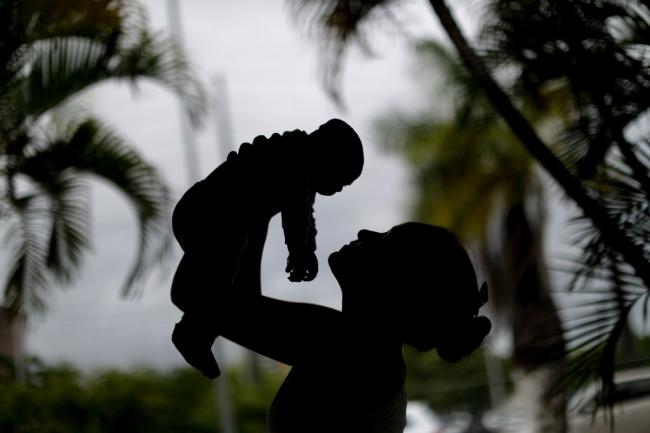
Vigilance against Zika virus should ‘remain high,’ UN health agency says in new guidance
The new WHO data also lists countries where the Aedes aegypti mosquito is present, but where there is no sign of the Zika virus.
The insect is considered to be the main transmitter of the disease, which has been identified in more than 80 countries to date.
As such, WHO says that overall, the global risk assessment has not changed and “the [Zika virus] continues to spread geographically to areas where competent vectors are present.
The current data adds some 70 countries to the list of those considered to be ‘at-risk.’ These are countries where there’s no sign of the virus, but where the Aedes aegypti mosquito is present; it is considered to be the main carrier of the virus.
Speaking to UN News in Geneva, WHO technical Officer Monika Gehner said: “[The new guidance] helps us because now we can assess risks more precisely. Now, even if you do not have Zika virus transmission, but if you have the Aedes aegypti mosquito, you are at risk of Zika virus transmission.”
She went on to stress that amid surging global travel, “a traveller who is infected with Zika virus may go to an area in a country and in fact mosquitos that are established there, and a mosquito can then transmit to other people and so on, so you have a cycle of transmission.”
The aim of this new WHO guidance is not to spread alarm. Instead, it’s a call to governments to do more to prevent the spread of Zika.
This requires greater surveillance of mosquito populations and research into suspected Zika infections, as well as better diagnostic techniques and updated health advice to at-risk communities and travellers.
Photo: UNICEF/Ueslei Marcelino
Source: www.justearthnews.com
Support Our Journalism
We cannot do without you.. your contribution supports unbiased journalism
IBNS is not driven by any ism- not wokeism, not racism, not skewed secularism, not hyper right-wing or left liberal ideals, nor by any hardline religious beliefs or hyper nationalism. We want to serve you good old objective news, as they are. We do not judge or preach. We let people decide for themselves. We only try to present factual and well-sourced news.
Support objective journalism for a small contribution.


