


'Vicious circles linking violence and hunger' must end – UN agriculture chief
“Food security is an important foundation for peace, political stability and sustainable development. In the history of humanity, time and time again we have seen vicious circles linking violence and hunger – and these are conflicts that are not restricted by national borders,” FAO Director-General José Graziano da Silva said to participants today.
In addition to Graziano da Silva’s briefing, the meeting was also expected to hear opening remarks from the Chair of the Peacebuilding Commission, another briefing by the Assistant Secretary-General for Peacebuilding Support as well as an interaction with Member States.
In his remarks, the FAO Director-General emphasized that food security can be used as “a conflict prevention and mitigation tool” for the advancement of peace and security. Policies and actions on food security can not only build resilience and resolve conflicts; they can help prevent them, too.
“We cannot just wait for an emergency to react. To achieve food security, we need to act before the crisis. We cannot prevent a drought from happening, but we can prevent it from becoming famine,” he added.
Hunger kills far more people than war or terrorism, he noted during his speech. For example, between 2004 and 2009, an estimated 55,000 people a year lost their lives as a direct result of conflict or terrorism, while in Somalia alone, between 2010 and 2012 over 250,000 died due to famine caused by severe drought, Graziano da Silva said.
Meanwhile, the impact of conflicts in rural areas can be devastating for crop production, livestock and harvests and often causes the destruction of farm assets and household capital.
And the impact of conflicts on food security often lasts long after the violence has subsided, Graziano da Silva said.
As agriculture continues to be the primary way of life for the majority of people in post-conflict countries, rehabilitation and revival of agriculture in those areas, therefore, becomes crucial to alleviating poverty and ensuring overall development.
The FAO Director-General emphasized that “partnerships are crucial,” spotlighting that now more than ever countries need to work together to overcome the multiple, interconnected challenges. It is in this spirit of collaboration that FAO has been able to successfully carry out projects across the globe.
Additionally, with the crafting of new global sustainable development goals (SDGs) underway, “improved knowledge and understanding of the possible interplays between food security and human security will help shape more effective interventions and contribute to more lasting results,” Graziano da Silva said.
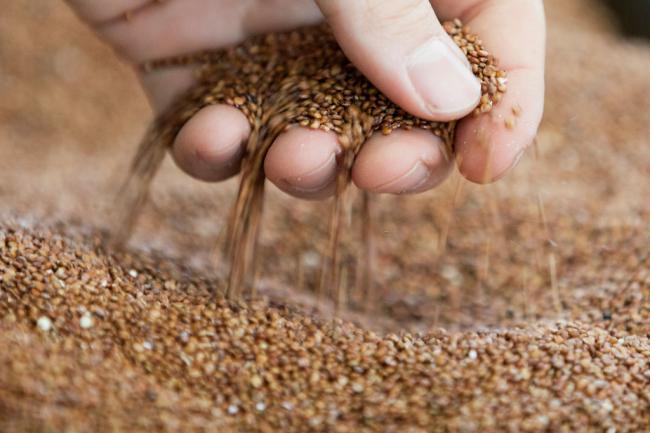
Photo: FAO/Alessia Pierdomenico
Support Our Journalism
We cannot do without you.. your contribution supports unbiased journalism
IBNS is not driven by any ism- not wokeism, not racism, not skewed secularism, not hyper right-wing or left liberal ideals, nor by any hardline religious beliefs or hyper nationalism. We want to serve you good old objective news, as they are. We do not judge or preach. We let people decide for themselves. We only try to present factual and well-sourced news.
Support objective journalism for a small contribution.


