


UN resilience ‘scorecard’ to help cities curb disaster losses from climate change, other risk drivers
Announcing a major revision to its Disaster Resilience Scorecard, the UN Office for Disaster Risk Reduction (UNISDR) said the changes bring the mechanism into alignment with the Sendai Framework for Disaster Risk Reduction, the global plan for reducing disaster losses.
It is a major boost to the goal of having more strategies in place at local level for reducing disaster losses from climate change and other risk drivers. This is a key area of focus this week at the UN’s biennial Global Platform for Disaster Risk Reduction where the Scorecard was launched on Tuesday. Plans are in place to have 200 cities using it by the end of the year.
“National governments have the primary responsibility of implementing the Sendai Framework working with many stakeholders, and the Scorecard is a valuable support to this work at the local level,” pointed out UNISDR chief Robert Glasser.
UNISDR noted that the revision was undertaken by its private sector partners, American firms AECOM and IBM, with the support of the European Commission and USAID. It follows a pilot project undertaken by 35 cities that are members of the UNISDR Making Cities Resilient Campaign which comprises over 3,500 cities worldwide.
Kathy Oldham, Head of Civil Contingencies and Resilience Unit, Association of Greater Manchester Authorities, of the United Kingdom, commented that: “using the Disaster Resilience Scorecard gave us the opportunity to broaden and deepen our understanding of resilience, bringing together partners from across the city region in conversations to explore the different issues the Scorecard highlights.”
Other cities that participated in the pilot included Yogyakarta, Indonesia; Islamabad, Pakistan; Hong Kong, China; Geneva, Switzerland; Quito, Ecuador; and Kisumu, Kenya.
Losses due to disasters from natural and man-made hazards including floods, storms and the impacts of climate change are mounting and on average cost governments over $300 billion globally each year.
The Scorecard provides a set of assessments that cover the policy and planning, engineering, organisational, financial, social and environmental aspects of disaster resilience. Designed to be led by local government authorities, the Scorecard aims to assist in monitoring and reviewing progress in the implementation of the Sendai Framework.
The Scorecard is a free self-assessment tool to be used by cities or local government agencies.
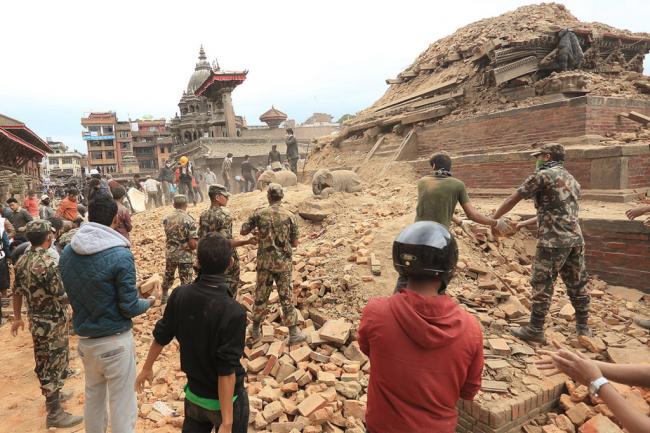
Photo: UNDP Nepal/Laxmi Prasad Ngakhusi
Source: www.justearthnews.com
Support Our Journalism
We cannot do without you.. your contribution supports unbiased journalism
IBNS is not driven by any ism- not wokeism, not racism, not skewed secularism, not hyper right-wing or left liberal ideals, nor by any hardline religious beliefs or hyper nationalism. We want to serve you good old objective news, as they are. We do not judge or preach. We let people decide for themselves. We only try to present factual and well-sourced news.
Support objective journalism for a small contribution.


