

UN official in Somalia appeals for scaled-up assistance in newly opened areas
“I was pleased to meet with people on the ground and see how medical and other humanitarian supplies are now going to these areas, after years of isolation,” said Peter de Clercq press release, noting that he was particularly encouraged by the resilience and determination of the people living in the towns he and his team had visited.
At the same time, much work remains to help people rebuild their future. Particularly concerning were the displaced people returning home, many of whom needed immediate support, he said.
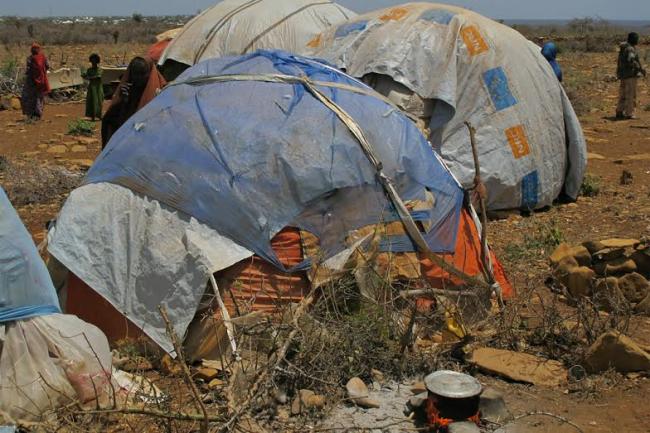
Due mainly to insecurity, only limited humanitarian assistance had been provided in either location for many years. Further, during recent military operations, hospitals were looted or burnt, leaving civilians in dire need of assistance.
“As I visited hospitals and schools in the two towns, I spoke to people who had suffered enormously,” said de Clercq.
On 5 August, humanitarian actors helped to meet the town’s critical and urgent need for medication by facilitating the transport of 1.2 metric tonnes of medical supplies into Diinsoor, located in Bay’s south-western region.
“A woman told me she hasn’t been able to leave Diinsoor for the last eight years,” recounted the Humanitarian Coordinator. A mother of two, the woman feared for the lives of her children, as the town had neither health nor educational services.
Although food, clean water and basic services remained scarce in both towns, schools were due to re-open soon – albeit with damaged infrastructure and too few teachers.
Over the past months, most livelihoods had been destroyed – leading to serious food insecurity and high malnutrition. For nearly a decade, farmers had been unable to access quality seeds and irrigation systems laid shattered. Additionally, livestock had not been vaccinated.
The Humanitarian Coordinator explained that providing support to agricultural and livestock production was crucial, including urgent assistance so the local population may produce more and faster, gradually allowing them to stand on their feet and look to a brighter future.
de Clercq and the assessment teams discussed response activities with the authorities and humanitarian colleagues. During a meeting with community elders in Diinsoor, the Humanitarian Coordinator praised their positive spirit of cooperation, courage and sacrifice to assist humanitarian actors in their efforts to deliver.
“The expectations are very high, and we must work hard so that we do not let down the people of Diinsoor and other areas that recently opened up,” he said.
Currently, more than 14 humanitarian organizations work in the two towns and, as the situation improves, more are expected to begin activities.
Photo: OCHA/Cecilia Attefors
Support Our Journalism
We cannot do without you.. your contribution supports unbiased journalism
IBNS is not driven by any ism- not wokeism, not racism, not skewed secularism, not hyper right-wing or left liberal ideals, nor by any hardline religious beliefs or hyper nationalism. We want to serve you good old objective news, as they are. We do not judge or preach. We let people decide for themselves. We only try to present factual and well-sourced news.
Support objective journalism for a small contribution.