


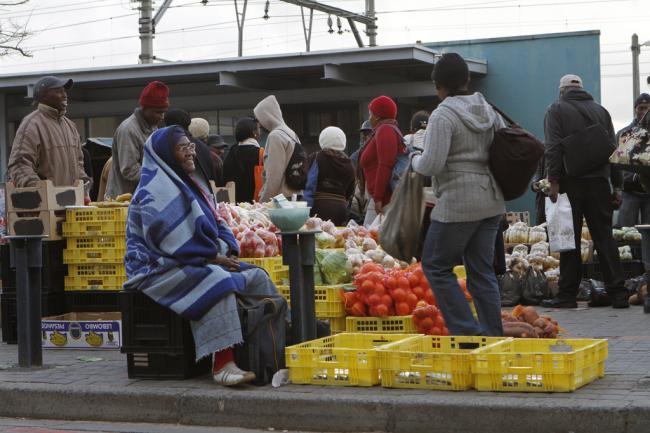
UN labour agency unveils historic employment standards against informal work
The Recommendation – the first ever international labour standard designed to tackle the informal economy – was passed by 484 votes in favour and received “outstanding support” from the ILO’s so-called tripartite constituents, according to the UN agency, which added that the document acknowledges that most people enter the informal economy “not by choice but due to a lack of opportunities.”
“Over the years we’ve seen a growing consensus between governments, workers and employers that the right thing to do is to move people from an informal to a formal employment situation,” ILO Director-General Guy Ryder said in a press release issued in Geneva, where the International Labour Conference is under way through tomorrow 13 June.
He said, “We know it is not easy, we know that these are processes are complicated and take time, but the great value of this Recommendation is that we now have an international framework of guidance to help Member States bring this about.”
According to the ILO, the new international standard provides guidance for Member States to facilitate the transition of workers and economic units from the informal to the formal economy; promote the creation, preservation and sustainability of enterprises and decent jobs in the formal economy; and prevent the ‘informalization’ of formal economy jobs, all within the context of the post-2015 development agenda.
However, Ryder continued, the adoption of the Recommendation was just the first step in an effort that aims to help somewhere between 45 and 90 per cent of informal workers, depending on the developing region.
In order to roll out the new standards, Member States will, in fact, be able to seek advice from the 12 guiding principles delineated by the ILO and which were modelled on the successful experiences already enjoyed by many countries in their transition to formality.
“It is not just the adoption of this Recommendation,” the ILO head declared, “it’s actually putting it into practice that will matter.”
Photo: World Bank/John Hogg
Support Our Journalism
We cannot do without you.. your contribution supports unbiased journalism
IBNS is not driven by any ism- not wokeism, not racism, not skewed secularism, not hyper right-wing or left liberal ideals, nor by any hardline religious beliefs or hyper nationalism. We want to serve you good old objective news, as they are. We do not judge or preach. We let people decide for themselves. We only try to present factual and well-sourced news.
Support objective journalism for a small contribution.


