


UN Internet Governance Forum closes with call to close ‘digital divide’
“Leading up to the twelfth IGF next year, innovations in programming and intersessional activities will continue to be implemented in a bottom-up manner, based on feedback from the multistakeholder community and in line with our new mandate which calls for greater participation from stakeholders from developing countries and improved working modalities,” Juwang Zhu, Director of the Division for Sustainable Development in the UN Department of Economic and Social Affairs (DESA) said in a news release on Friday.
Further, according to the release, experts at the global event highlighted that in addition to the physical challenges of getting people connected at affordable rates, many people do not yet fully recognize the Internet’s value.
Participants at the Forum also noted that no one solution fits all problems.
For instance, sub-Saharan Africa accounts for the lowest levels of Internet usage in the world with less than three per cent of the population using it in countries including Chad (2.7 per cent), Sierra Leone (2.5 per cent), Niger (2.2 per cent), Somalia (1.8 per cent) and Eritrea (1.1 per cent).
Furthermore, while connectivity between developed and developing countries, within regions and even within countries continues to be an economic and infrastructural challenge, others barriers also exist in digital literacy.
One of this is the “gender gap.” There are 257 million more men online than women and it is particularly concerning that women face a wider variety of online harassment and abuse than men.
“It is very important to bring women online because the part of the population that is not online is missing out a lot. They need to enhance their businesses, they need to enhance their lives, and part of that comes with them being online,” said Evelyn Namara, Founder and CEO of !nnovate Uganda, an organization that works toward sustainable technological development.
The IGF this year included some 150 sessions discussing a number of issues such as human rights and freedom of expression online, multi-stakeholder cooperation, and cybersecurity.
The Forum also recognized the “critical role” of the Internet in providing access to opportunities to all people. Participants, including from governments, the technical community, private sector and civil society also advocated for more capacity-building, training as well as closer collaboration and partnerships.
The release further added that an emerging consensus has developed among the IGF community that the Internet’s core values of openness, freedom, resilience, safety and decentralisation are fundamental for enabling sustainable growth.
Each year, the UN convenes the IGF meeting to unify various stakeholders and discuss Internet governance issues, as well as opportunities and challenges in an open, inclusive and transparent forum. This year's theme was Enabling Inclusive and Sustainable Growth.
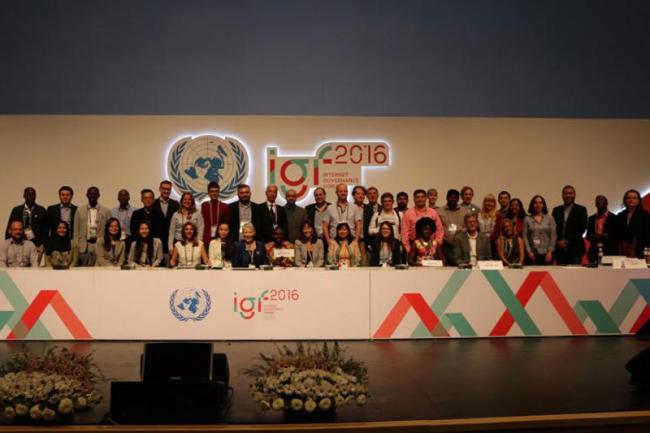
Photo: IGF
Source: www.justearthnews.com
Support Our Journalism
We cannot do without you.. your contribution supports unbiased journalism
IBNS is not driven by any ism- not wokeism, not racism, not skewed secularism, not hyper right-wing or left liberal ideals, nor by any hardline religious beliefs or hyper nationalism. We want to serve you good old objective news, as they are. We do not judge or preach. We let people decide for themselves. We only try to present factual and well-sourced news.
Support objective journalism for a small contribution.


