


UN environment agency unveils low-cost device for air quality monitoring
“We know from the World Health Organization (WHO) that 88 per cent of deaths related to outdoor pollution occur in low- and middle-income countries,” said UNEP Executive Director, Achim Steiner.
He added, "Yet it is these same developing countries that typically lack access to data on their air quality.”
“UNEP's device can spark a data boom to help countries reduce the negative effects of air pollution, potentially saving lives that would have been lost due to air pollution-related illnesses,” Steiner explained.
In an announcement in Nairobi, Kenya, where UNEP is headquartered, the agency said “the device, capable of collecting all the vital parameters of air quality, will cost around $1,500 per unit, allowing governments to establish a countrywide network of mobile and stationary air monitoring stations for as little as $150,000-200,000.
“Currently, roughly the same amount of money is necessary to set up just one monitoring station,” UNEP said, adding that it plans to make the blueprints of its device publically available.
“This will allow governments and organizations to assemble or fabricate the units themselves, creating opportunities for innovation, enterprise development and green job creation,” the agency said.
A pilot project, inaugurated Monday in Kenya’s capital, will further test the device and map the city’s air pollution hotspots.
“Preliminary test results, collected by the mobile monitoring unit, show that large parts of the city may have unsafe levels of air pollution, with certain areas particularly affected,” UNEP said.
Despite a generally lower degree of industrialization, according to the agency, African cities suffer the consequences of poor air quality, mainly due to high levels of particulate matter, containing hazardous airborne chemicals especially harmful to human health.
Most fine particulate matter comes from fuel combustion, both from vehicles and stationary sources such as power plants, industry and households.
“Each year, air pollution causes 7 million premature deaths around the world, with outdoor pollution responsible for more than half of that total,” Steiner said.
He added, “Tragically, these deaths are wholly preventable.”
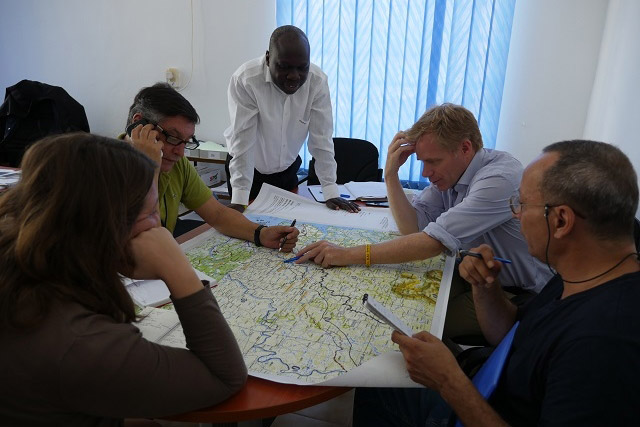
Photo: UNEP
Support Our Journalism
We cannot do without you.. your contribution supports unbiased journalism
IBNS is not driven by any ism- not wokeism, not racism, not skewed secularism, not hyper right-wing or left liberal ideals, nor by any hardline religious beliefs or hyper nationalism. We want to serve you good old objective news, as they are. We do not judge or preach. We let people decide for themselves. We only try to present factual and well-sourced news.
Support objective journalism for a small contribution.


