September 21, 2026 05:46 am (IST)

Follow us:


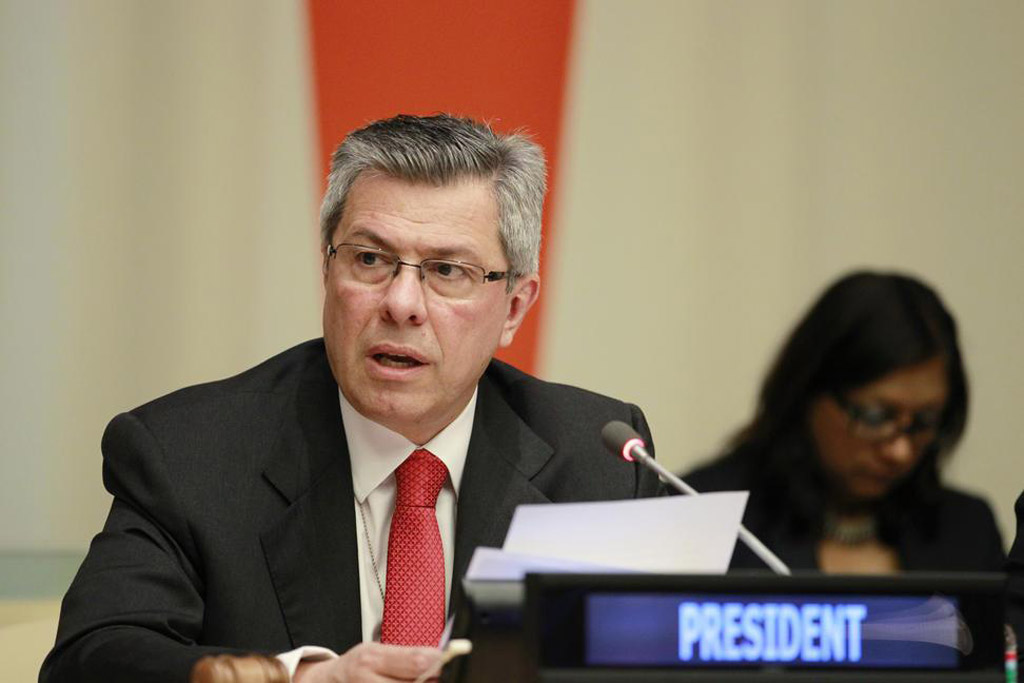
UN convenes major event on sustainable cities
New York, May 28 (IBNS): With 6.3 billion people expected to live in urban areas by 2050, the United Nations Economic and Social Council (ECOSOC) on Tuesday kicked off a three-day event to look at challenges and opportunities for the sustainable future of cities.
Sustainable urbanization is the focus of the event, which is the first-ever meeting of ECOSOC’s integration segment – a new annual segment on the economic, social and environmental pillars of sustainable development.
“The decision to focus on sustainable urbanization for the first session of the segment was sensible and timely in view of the growing impact of urbanization trends on sustainable development; and in view of the growing importance of cities in delivering practical results to reduce poverty, protect the natural environment and improve disaster reduction and resilience,” said ECOSOC Vice-President Vladimir Drobnjak.
More than 50 per cent of the world’s population lives in urban areas on Tuesday. By 2050, about 70 per cent of the world’s population is expected to live in urban areas, and more than 60 per cent of the land projected to become urban by 2030 is yet to be developed. Ninety-five per cent of urban expansion will take place in developing countries.
“Urban areas are at the heart of many great challenges, opportunities and promise,” Secretary-General Ban Ki-moon told the gathering. “People move to cities for jobs and other opportunities. But too many cities face challenges, including weak infrastructure, unemployment and pollution. Climate change is increasing risks in all cities, where the poorest people are hit the hardest.”
He noted plans and policies must consider the people that they affect. This means that urban transport policies should focus on the safety of women, access for the disabled, and meeting the needs of all vulnerable people; that efforts to encourage business activity should also promote corporate responsibility; and that the capacity of governments should be strengthened to plan, construct and manage urban areas.
Isabelle F. Picco, Vice-President of the General Assembly, said that with the right policies and approaches, urbanization can be a “transformative force” that helps address some of the world’s major challenges, such as poverty, unemployment and climate change.
“We must harness the creative energies and resources of cities. For they will be the fertile ground where our global sustainable development efforts take root,” she added.
The President of Rwanda, the Vice-President of Colombia, and the mayors of Istanbul, Kingston, Johannesburg, Paris and Victoria, amongst other cities, are among the participants at the event being held at UN Headquarters, as well as former Mayor of New York City and UN Special Envoy for Cities and Climate Change Michael Bloomberg.
(ECOSOC Vice-President Vladimir Drobnjak, addresses the opening of the three-day integration segment. UN Photo/Paulo Filgueiras)
Support Our Journalism
We cannot do without you.. your contribution supports unbiased journalism
IBNS is not driven by any ism- not wokeism, not racism, not skewed secularism, not hyper right-wing or left liberal ideals, nor by any hardline religious beliefs or hyper nationalism. We want to serve you good old objective news, as they are. We do not judge or preach. We let people decide for themselves. We only try to present factual and well-sourced news.
Support objective journalism for a small contribution.



Latest Headlines
Italy PM Meloni announces big school plan: Burqa, hijab ban and cap on foreign students
Sun, Sep 20 2026
North Korea fires two missiles toward East Sea, South Korea confirms
Sun, Sep 20 2026
Houthis claim Saudi F-15 shot down as Mecca drone row escalates
Wed, Sep 16 2026