September 21, 2026 04:41 am (IST)

Follow us:


UN concerned over eviction of indigenous group in Cameroon
New York, Apr 11 (IBNS): The independent United Nations experts dealing with the rights of minorities and of indigenous peoples on Thursday voiced their concern about the eviction and demolition of houses of the Mbororo pastoralist community in Cameroon, and urged a solution to their plight.
An estimated 300 people have reportedly been made homeless and evicted from their ancestral lands in the locality of Banjah, Bamenda. The location of the evictions is the scene of a long-term land dispute between the Mbororo community and the Catholic University in Bamenda.
Mbororo pastoralist communities, who identify as indigenous minorities, account for some 12 per cent of Cameroon’s population and often face conflicts over access to and ownership of land and access to water.
Special Rapporteurs on minority issues, Rita Izsák, and on the rights of indigenous peoples, James Anaya, called on the Government and the Catholic University to urgently review the evictions and the demolitions.
“I urge the authorities and the Catholic University in Bamenda to review these actions and their impact on this community and immediately seek a settlement with them,” said Izsák, who visited the Mbororo community in Banjah during her 2013 official mission to Cameroon.
Anaya recalled that “indigenous peoples shall not be forcibly relocated from their lands or territories,” quoting the UN Declaration on the Rights of Indigenous Peoples. “No relocation shall take place without the free, prior and informed consent of the indigenous peoples concerned and after agreement of fair and just compensation,” he stated in a news release.
The University claims to have paid compensation to community members to acquire and build on the site. Community members claim to have been misled regarding payments and state that they would not voluntarily have agreed to quit their homes and land that they have occupied since 1904.
Three bulldozers, escorted by armed gendarmes, reportedly arrived on 3 April to start demolishing the Mbororo homes. Community members have no alternative accommodation.
The experts highlighted that “appropriate alternative accommodation must still be provided to community members who have been left homeless and extremely vulnerable, even if the evictions are found to be legally justified based on international standards and within a participatory, consensus building process involving the Mbororo people.”
“Where possible,” they stressed, “the Mbororo must be provided with the opportunity to return to their traditional lands.”
“We are saddened that a community whose survival depends on their lands and cattle is now deprived of access to their ancestral lands,” they said. “This also contravenes the UN Declaration on Minorities, which requires the protection of existence of minorities, and their unique ethnic, cultural and linguistic identity within the territories in which they live.”
Independent experts or special rapporteurs are appointed by the UN Human Rights Council in Geneva to examine and report back on a country situation or a specific human rights theme. The positions are honorary and the experts are not UN staff, nor are they paid for their work.
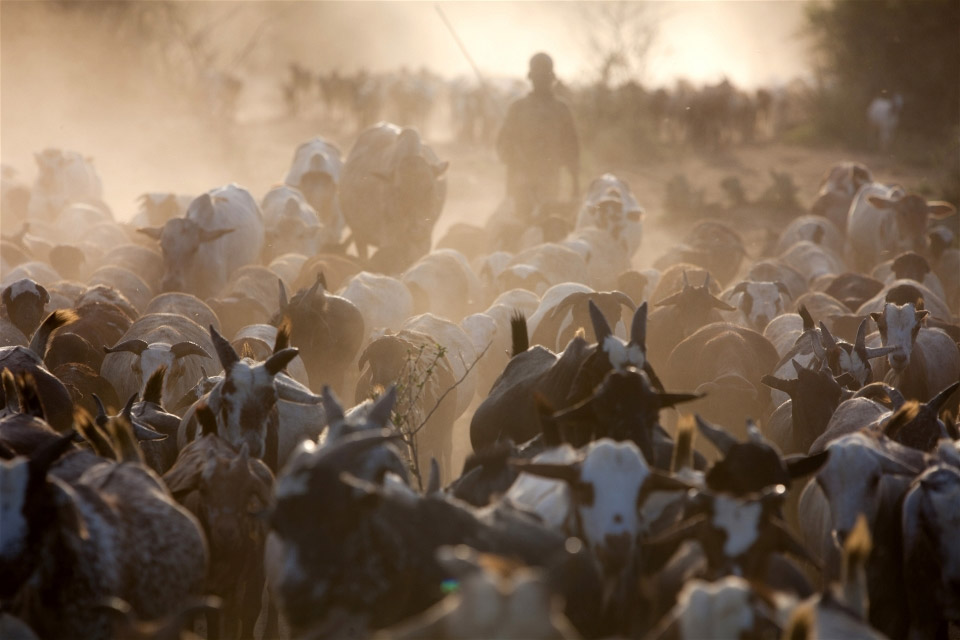
[Pastoralists and their cattle. Photo: IRIN/Gwenn Dubourthoumieu (file)]
Support Our Journalism
We cannot do without you.. your contribution supports unbiased journalism
IBNS is not driven by any ism- not wokeism, not racism, not skewed secularism, not hyper right-wing or left liberal ideals, nor by any hardline religious beliefs or hyper nationalism. We want to serve you good old objective news, as they are. We do not judge or preach. We let people decide for themselves. We only try to present factual and well-sourced news.
Support objective journalism for a small contribution.



Latest Headlines
Italy PM Meloni announces big school plan: Burqa, hijab ban and cap on foreign students
Sun, Sep 20 2026
North Korea fires two missiles toward East Sea, South Korea confirms
Sun, Sep 20 2026
Houthis claim Saudi F-15 shot down as Mecca drone row escalates
Wed, Sep 16 2026