


UN-backed summit opens to harnesses global momentum to eliminate viral hepatitis
According to WHO, which is co-sponsoring the summit with the World Hepatitis Alliance, some 400 million people are currently living with viral hepatitis, and the disease claims an estimated 1.45 million lives each year, making it one of the world’s leading causes of death.
Policymakers, patient groups, physicians and other key stakeholders attending the summit hosted by the Scottish Government in Glasgow are expected to issue a declaration underlining their belief that the elimination of viral hepatitis is possible.
They aim to urge governments to work with WHO to define and agree on global targets for prevention, diagnosis and treatment.
And WHO said it is launching a new manual for the development and assessment of national viral hepatitis plans at the summit.
“We know how to prevent viral hepatitis, we have a safe and effective vaccine for hepatitis B, and we now have medicines that can cure people with hepatitis C and control hepatitis B infection,” said Dr. Gottfried Hirnschall, Director of the WHO’s Global Hepatitis Programme.
“Yet access to diagnosis and treatment is still lacking or inaccessible in many parts of the world,” Dr. Hirnschall said.
He said, “This summit is a wake-up call to build momentum to prevent, diagnose, treat – and eventually eliminate – viral hepatitis as a public health problem.”
The summit is the first high-level global meeting to focus specifically on hepatitis, attracting delegates from more than 60 countries.
The aim is to help countries enhance action to prevent viral hepatitis infection and ensure that people who are infected are diagnosed and offered treatment.
Policymakers and other key stakeholders at the three-day meeting beginning today are also discussing a draft strategy paper, which sets targets for 2030. WHO said the targets include a 90 per cent reduction in new cases of chronic hepatitis B and C, a 65 per cent reduction in hepatitis B and C deaths, and treatment of 80 per cent of eligible people with chronic hepatitis B and C infections.
In sub-Saharan Africa and East Asia between 5-10 per cent of the population is chronically infected with hepatitis B.
High rates of chronic infections are also found in the Amazon and the southern parts of eastern and central Europe. Hepatitis C is found worldwide. Infection rates are high in Africa and Central and East Asia, and approximately two-thirds of people who inject drugs are infected with hepatitis C.
Hepatitis B and C cause approximately 80 per cent of all liver cancer deaths, yet most people living with chronic viral hepatitis are unaware of their infection, the health agency said.
The summit is intended to become an annual event.
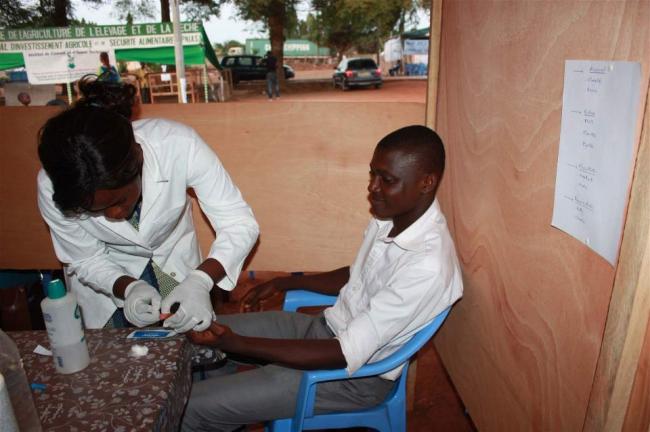
Photo: IRIN/Isidore Akollor
Support Our Journalism
We cannot do without you.. your contribution supports unbiased journalism
IBNS is not driven by any ism- not wokeism, not racism, not skewed secularism, not hyper right-wing or left liberal ideals, nor by any hardline religious beliefs or hyper nationalism. We want to serve you good old objective news, as they are. We do not judge or preach. We let people decide for themselves. We only try to present factual and well-sourced news.
Support objective journalism for a small contribution.


