


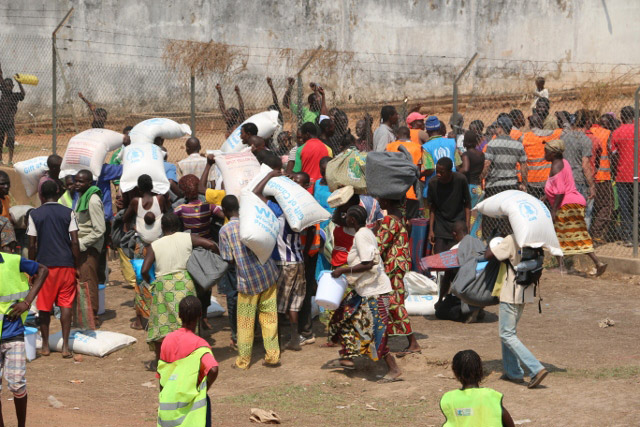
UN aid wing cites ‘deep concern’ at surge in attacks on relief workers in Central African Republic
According to the UN Office for the Coordination of Humanitarian Affairs (OCHA) in the African country, there were 336 attacks against humanitarian workers in 2016, 56.8 per cent of them robberies and burglaries.
Five humanitarian workers were killed in 2016 in the line of duty, and according to OCHA Bureau Chief Joseph Inganji, a total of 24 have been killed since 2013. These attacks occur as humanitarian crises multiply in several prefectures with an alarming increase in the number of displaced.
“Humanitarian action has no other purpose than to save lives […] tackling the humanitarian community is tantamount to attacking the most vulnerable populations, those who need often vital assistance,” he said.
During the last quarter, the outbreaks of violence displaced more than 70,000 people. In some areas humanitarian workers cannot reach the displaced who are hidden in the bush due to insecurity. The most negative impact of the reduction of humanitarian space is thus felt by the most deprived.
Inganji, however, said that the humanitarian appeal of $532 million has been “poorly” funded, with only 34 per cent of the target met.
In 2017, about 2.2 million, or nearly half of the 4.6 million people in the country will be in need of humanitarian aid.
Inganji hopes that OCHA will be able to reach all of them, but the situation for security and financing must improve.
Photo: OCHA
Source: www.justearthnews.com
Support Our Journalism
We cannot do without you.. your contribution supports unbiased journalism
IBNS is not driven by any ism- not wokeism, not racism, not skewed secularism, not hyper right-wing or left liberal ideals, nor by any hardline religious beliefs or hyper nationalism. We want to serve you good old objective news, as they are. We do not judge or preach. We let people decide for themselves. We only try to present factual and well-sourced news.
Support objective journalism for a small contribution.


