


UN agriculture agency calls for giant research leap to rein in farm-driven antimicrobial resistance
“Given our current limited knowledge of transmission pathways, options to mitigate the global spread of AMR involve controlling its emergence in various environments, and minimizing the opportunities for AMR to spread along what may be the most important routes,” says the report, titled Drivers, Dynamics and Epidemiology of Antimicrobial Resistance in Animal Production published on Tuesday by the Food and Agriculture Organization (FAO).
According to a news release on the report, there is mounting evidence that food systems may be major conduits of AMR, which points to the need for greater vigilance over the way antibiotics are used on farms.
The report is being launched during World Antibiotic Awareness Week, a joint initiative by FAO, the World Health Organization (WHO) and the World Organisation for Animal Health (OIE) to raise awareness of one of the biggest threats to global health. It summarizes the magnitude of AMR in the food and especially the livestock sector, which is expected to account for two-thirds of future growth in antimicrobial usage.
While antimicrobial resistance was first described in 1940, scientific understanding of the myriad of pathways by which resistance emerges and spreads remains in its infancy. The global use of synthetic products to indiscriminately kill bacteria, viruses, parasites and fungi in agricultural and food systems requires a concerted effort to map, understand and mitigate the risks of AMR, the report says.
As foods from around the globe are on Tuesday frequently contaminated with antibiotic resistant E. coli and Salmonella, “measures which encourage the prudent use of antimicrobials are likely to be extremely useful in reducing the emergence and spread of AMR,” the 67-page technical report says.
The report’s key recommendations are the need to support and pursue more research – involving both molecular sequencing and epidemiological analyses – into factors influencing how and why resistant bacteria become incorporated into human and animal gut microbiomes as well as the need to create standardized monitoring procedures and databases so that adequate risk-assessment models can be built.
Use of antimicrobials solely to promote animal growth should be phased out. Instead, alternatives to antibiotics to enhance animal health – including enhanced vaccination programmes – should be more vigorously pursued. Antimicrobial residues in the environment, especially in water sources, should be tracked in the same way as other hazardous substances, the report urges.
While cautious about how much remains unknown, the report highlights compelling evidence of the scale of the threat.
For instance, honeybees in the United States have different gut bacteria than found elsewhere, reflecting use of tetracycline in hives since the 1950s. Fish farms in the Baltic Sea show fewer AMR genes than aquaculture systems in China, which are now reservoirs of genes encoding resistance to quinolones – a critical human medicine whose use has grown because of increasing resistance to older antimicrobials such as tetracycline.
The recent detection of resistance to colistin, until recently considered a last-ditch antibiotic in human medicine, in several countries also underscores the need to scrutinize livestock practices, as the drug has been used for decades in pigs, poultry, sheep, cattle and farmed fish.
Sizing up mitigation options
The report focuses on livestock because future demand for animal-based protein is expected to accelerate intensive operations – where animals in close contact multiply the potential incidence of AMR pathogens.
Poultry, the world’s primary animal protein source, followed by pork, are important food-based vehicles of AMR transmission to humans. Cases in Tanzania and Pakistan also demonstrate the risk of AMR coming from integrated aquaculture systems that use farm and poultry waste as fish food.
While smallholder systems may rely less on antimicrobials, they often use over-the-counter drugs without veterinary advice. Inappropriate, sub-lethal, dosing promotes genetic and phenotypic variability among the exposed bacteria that survive.
Collectively, while there are still many gaps in our understanding about AMR, evidence about AMR in food systems is growing and points to the need for immediate action. Working collaboratively across all sectors and aspects of food production, from farm to table, will provide an essential contribution to an integrated one-health approach to combat AMR, the report says.
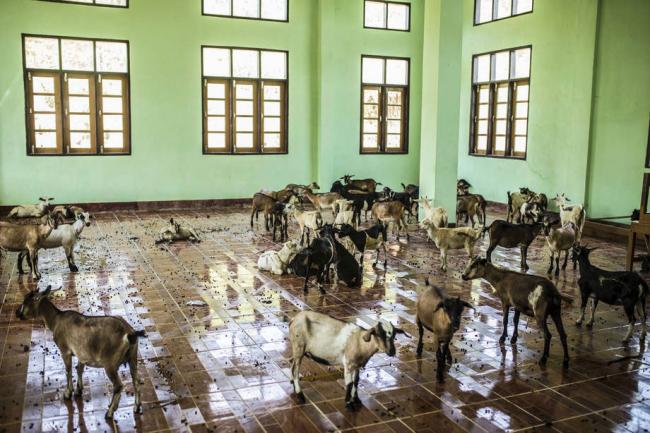
Photo: FAO/Hkun Lat
Source: www.justearthnews.com
Support Our Journalism
We cannot do without you.. your contribution supports unbiased journalism
IBNS is not driven by any ism- not wokeism, not racism, not skewed secularism, not hyper right-wing or left liberal ideals, nor by any hardline religious beliefs or hyper nationalism. We want to serve you good old objective news, as they are. We do not judge or preach. We let people decide for themselves. We only try to present factual and well-sourced news.
Support objective journalism for a small contribution.


