


UN agricultural agency and USAID sign agreement to boost developing countries’ ability to track key data
"In the decades to come, humanity will need to produce more food for a growing population using natural resources such as water, land and biodiversity in a sustainable way – while coping with the challenges imposed by climate change," the Director-General of the UN Food and Agriculture Organization, José Graziano da Silva, said in a news release.
"Our ability to boost food yields sustainably and meet the SDG hunger eradication target will hinge on the availability of better, cost-effective and timely statistical data for agriculture and rural areas" he added.
On 1 January 2016, the 17 SDGs of the 2030 Agenda for Sustainable Development — adopted by world leaders in September last year – officially came into force. Over the next fifteen years, with the aim of achieving the SDGs, countries will mobilize efforts to end all forms of poverty, fight inequalities and tackle climate change, while ensuring that no one is left behind.
In particular, Goal 2 of the SDGs is centred on ending hunger, achieving food security, improving nutrition, and promoting sustainable agriculture. According to FAO, Goal 2 recognizes the interlinkages among supporting sustainable agriculture, empowering small farmers, promoting gender equality, ending rural poverty, ensuring healthy lifestyles, tackling climate change, and other issues.
The USAID donation will cover the first phase of an FAO-led project that will run from 2016 to 2021, starting with pilot efforts in four developing countries – two in sub-Saharan Africa, one in Latin America and one in Asia. A dialogue is under way with eligible countries.
The goal of the project is to design and implement a new and cost-effective approach to agricultural data collection in developing world contexts, known as agricultural integrated surveys (AGRIS).
In the news release, FAO said that the AGRIS methodology will not only capture improved annual data on agricultural production, but also broader and more detailed structural information relating to farms, including employment, machinery use, production costs, farming practices, and environmental impacts.
It will incorporate recent innovations like remote sensing, global positioning systems (GPS), mobile technology and various uses of ‘big data.’ These tools will introduce more objective approaches to measuring agricultural performance, in some cases replacing traditional, more expensive methods. In addition to better and more detailed data, AGRIS is also expected to promote the integration of disparate data sources, improve data timeliness and usability, and cut data collection costs.
“The end result,” according to FAO, “will be high-quality data on a wide range of technical, economic, environmental and social dimensions of agriculture that will help governments analyse and understand the impacts of agricultural policies, assess progress toward the SDGs and other goals, and shape better policies.”
“Strong national data systems are critical for governments and private sector actors to make informed and smart decisions that foster food security and economic prosperity,” the Assistant to the Administrator for USAID’s Bureau for Food Security, Beth Dunford, said in the FAO news release.
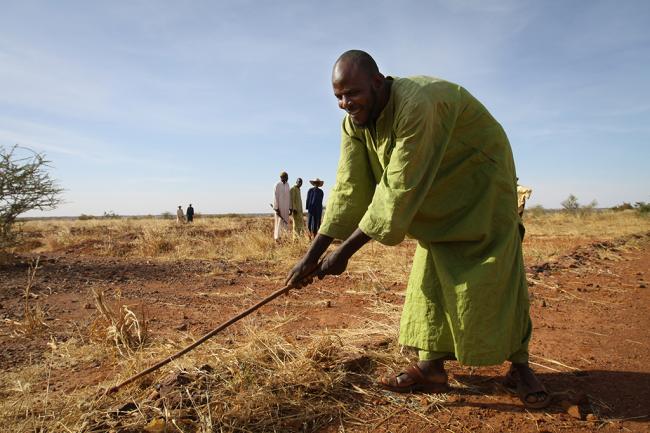
UN Photo/WFP/Phil Behan
Source: www.justearthnews.com
Support Our Journalism
We cannot do without you.. your contribution supports unbiased journalism
IBNS is not driven by any ism- not wokeism, not racism, not skewed secularism, not hyper right-wing or left liberal ideals, nor by any hardline religious beliefs or hyper nationalism. We want to serve you good old objective news, as they are. We do not judge or preach. We let people decide for themselves. We only try to present factual and well-sourced news.
Support objective journalism for a small contribution.


