


UN agency sounds warning over Iraqis displaced to country's South
The UN World Food Programme (WFP) recently conducted an assessment of Iraqis fleeing the country's current crisis to southern governorates of Najaf, Kerbala and Babel, where the organization assists about 50,000 people.
“Despite the dangers and challenges posed in accessing this area, WFP has been present in southern and central Iraq since the start of the country's crisis in 2014,” said Jane Pearce, Representative and Country Director of the WFP Office in Iraq.
Many were unable to find refuge in the crowded northern Kurdistan Region of Iraq, which hosts close to 50 per cent of internally displaced Iraqis and where WFP began providing vouchers for food to hungry people in November. The vouchers allow people to make their own choices and, as they are spent in local shops, help strengthen the area's economy.
Despite that, some have chosen not to head North, as they say it is too expensive. Many displaced people who went to the South of the country now live in unoccupied public buildings, mosques known as Husseineyat that local authorities have provided as shelter, or with host communities.
“In August of 2014, WFP established a sub-office in Basrah dedicated to supporting internally displaced Iraqis in the southern governorates. The office is exploring different ways to expand assistance to displaced families,” said Asif Niazi, coordinator of WFP southern operations.
Most families displaced to southern Iraq told the WFP assessment team that they spent the little savings that they had on transportation to get there and now struggle to feed their families or know where their next meal will come from. Najat Hussein, a 36 year-old mother of six, lost her husband seven months ago in the conflict in Tel Afar.
“I moved to Kerbala because it is expensive elsewhere and I need shelter for my children,” she told WFP. “We receive WFP food rations every month. Without this help I would be begging for food.”
WFP delivers large amounts of food each year to all of Iraq's 18 governorates in the form of monthly food parcels that contain items such as wheat flour, cooking oil, rice and pasta, offering families nourishing meals. Others still on the move receive immediate response rations that include canned food.
The assessment team also spoke to officials from the three southern governorates to discuss food assistance to displaced people in the region whose numbers add to a total of 1.4 million displaced across the country.
“We thank the local governments of Najaf, Kerbala and Babel for their continued cooperation with WFP to alleviate the suffering of displaced Iraqis and helping us provide them with food,” said Ms. Pearce.
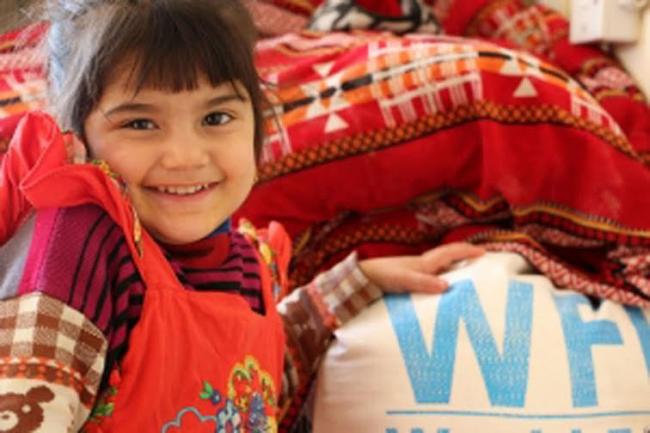
Photo: WFP/Mohammed Al Bahbahani
Support Our Journalism
We cannot do without you.. your contribution supports unbiased journalism
IBNS is not driven by any ism- not wokeism, not racism, not skewed secularism, not hyper right-wing or left liberal ideals, nor by any hardline religious beliefs or hyper nationalism. We want to serve you good old objective news, as they are. We do not judge or preach. We let people decide for themselves. We only try to present factual and well-sourced news.
Support objective journalism for a small contribution.


