


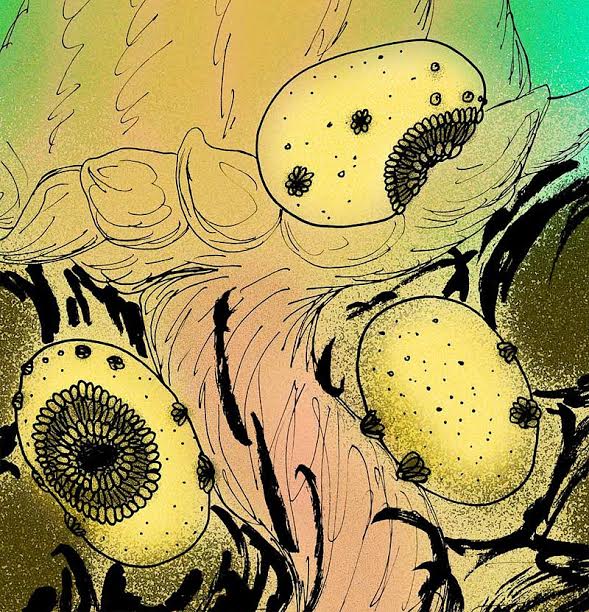
Toronto: Tiny, bag-like prehistoric creature could be our ancient ancestor
This new species Saccorhytus discovered in micro fossils in rock in Shaanxi, central China was believed by the scientists to be the most primitive example of a deuterostome.
Deuterostome is a category in biology that included many sub-groups, including vertebrates which resembles humans.
"Frankly, it doesn't look like anything very exciting; it looks like a tiny dot, a bit smaller than a grain of rice. But in the electron microscope, it's just eye-popping," Simon Conway Morris, a professor and fellow of St. John's College, Cambridge, and author the paper, CBC News reports said.
Three tonnes of these well-preserved fossils, found in limestone were broken down into very small pieces to fascilitate research under electron microscopes.
"The sheer fidelity of the preservation, the quality of the preservation is astonishing," Morris said, CBC News reports said.
Saccorhytus which meant wrinkled bag was just about one millimetre in size with an elliptical body and large mouth.
According to LiveScience.com the analysis indicated that it had a bilaterally symmetrical body, a characteristic it passed down to its descendants, including humans. It was also covered with a thin, flexible skin, suggesting it had muscles of some kind that could perhaps help it wriggle around in the water and engulf food with its large mouth, the researchers said.
The researchers found that the Saccorhytus had small conical features similar to gills which expelled excess water and waste.
The presence of gills was a common feature in the deuterostomes and in Saccorhytus.
But the researchers were not able to see the presence of an anus in Saccorhytus.
After studying the genetic information of related species scientists believed that the evolution of the species Saccorhytus occurred in a clock-like fashion.
Although the scientists could not determine the time period before the Saccorhytus, the finding supported the theory of the molecular clock indicating the earlier existence of creatures much smaller than the Saccorhytus.
Morris said although this discovery did not confirm about our earliest human ancestor but it was enlightening.
"This is our best glimpse of what we would regard as not the first deuterostome but one of the early examples," Said Morris, CBC News reports said.
The findings were published in the journal Nature.
(Reported by Asha Bajaj)
Support Our Journalism
We cannot do without you.. your contribution supports unbiased journalism
IBNS is not driven by any ism- not wokeism, not racism, not skewed secularism, not hyper right-wing or left liberal ideals, nor by any hardline religious beliefs or hyper nationalism. We want to serve you good old objective news, as they are. We do not judge or preach. We let people decide for themselves. We only try to present factual and well-sourced news.
Support objective journalism for a small contribution.


