


 Afghanistan
Taliban legalises domestic violence in Afghanistan without 'serious injury'
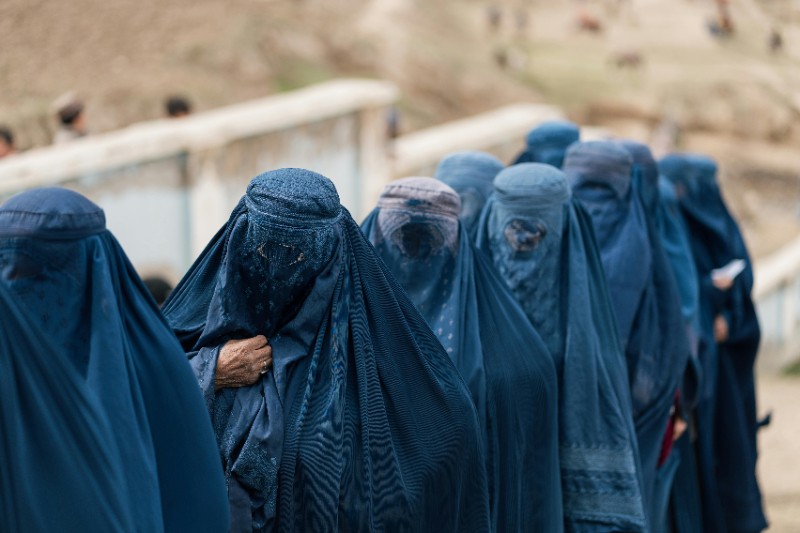
Kabul/IBNS: The Taliban has introduced a new penal code that effectively legalises domestic violence against women and children, provided the abuse does not result in “broken bones or open wounds”.
The 90-page code, signed by the group’s supreme leader Hibatullah Akhundzada, allows husbands to physically punish their wives and children under strict conditions that critics say normalise abuse rather than prevent it.
Limited consequences for abuse
Under the new provisions, a husband who causes visible fractures or injuries through what the code terms “obscene force” could face a maximum of just 15 days in prison.
Even then, a conviction depends on the woman successfully proving the abuse in court.
Women are required to present their injuries before a judge while remaining fully covered and must be accompanied by either their husband or a male chaperone, further complicating access to justice.
In contrast, a married woman can be imprisoned for up to three months if she visits relatives without her husband’s permission, highlighting the stark imbalance embedded in the law.
Punishment based on social status
Article 9 of the code introduces a rigid hierarchy dividing Afghan society into four groups: religious scholars, the elite, the middle class and the lower class.
Punishments are no longer determined primarily by the severity of the crime but by the accused person’s social standing.
If a religious scholar commits an offence, the response is limited to advice.
Members of the elite may face a court summons and counselling, while those classified as middle class are subject to imprisonment.
For individuals from the lower class, the same offence can result in both imprisonment and corporal punishment.
Serious corporal punishments are to be administered by Islamic clerics rather than correctional authorities.
Repeal of women’s protection law
The new penal code abolishes Afghanistan’s 2009 Elimination of Violence Against Women (EVAW) law, which had been enacted under the previous US-backed government to criminalise domestic abuse and forced marriage.
According to The Independent, rights groups say fear is widespread, with many Afghans reluctant to speak out even anonymously.
The Taliban has reportedly issued a ruling making discussion of the new code itself a punishable offence.
Calls for international intervention
Rawadari, an Afghan human rights organisation operating in exile, has urged the United Nations and other global bodies to immediately halt the implementation of the code and use all available legal mechanisms to prevent its enforcement.
UN Special Rapporteur on violence against women and girls Reem Alsalem warned of grave consequences, saying the implications for Afghan women and girls were “simply terrifying”.
In a post on X, she added that the Taliban appeared confident that no one would intervene, challenging the international community to prove otherwise.
Support Our Journalism
We cannot do without you.. your contribution supports unbiased journalism
IBNS is not driven by any ism- not wokeism, not racism, not skewed secularism, not hyper right-wing or left liberal ideals, nor by any hardline religious beliefs or hyper nationalism. We want to serve you good old objective news, as they are. We do not judge or preach. We let people decide for themselves. We only try to present factual and well-sourced news.
Support objective journalism for a small contribution.


