


 South Sudan
Starvation used as weapon of war in South Sudan conflict, UN rights body finds
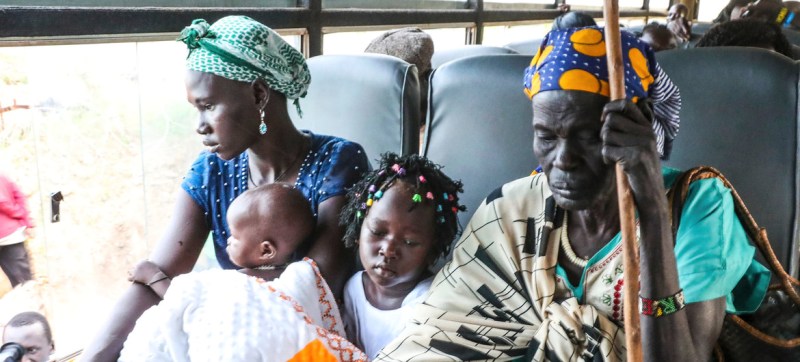
New York: Starvation is being intentionally used as a war tactic in South Sudan’s brutal conflict, a UN-backed human rights panel said on Tuesday, releasing its latest report on the country.
South Sudan gained independence in July 2011 but descended into conflict roughly two-and-a-half years later, following irreconcilable tensions between President Salva Kiir and his deputy, Riek Machar.
The Commission on Human Rights in South Sudan said the brutal fighting has caused incalculable suffering to civilians, and resulted in staggering levels of acute food insecurity and malnutrition.
Government and opposition culpable
“With 7.5 million South Sudanese currently requiring humanitarian assistance, we have found that food insecurity in Western Bahr el Ghazal, Jonglei, and Central Equatoria States is linked directly to the conflict and therefore almost entirely human-induced”, said the Commission Chair, Yasmin Sooka.
“It is quite clear that both Government and opposition forces have deliberately used the starvation of civilians as a method of warfare in these states, sometimes as an instrument to punish non-aligning communities, as in the case of Jonglei”.
The report is the first of its kind by a UN panel, according to the Commission, which was established by the UN Human Rights Council in March 2016. Members are not UN staff, nor are they paid by the Organization.
Collective punishment and starvation
It documents how between January 2017 and December 2018, Government forces intentionally deprived Fertit and Luo communities living under opposition control in Western Bahr el Ghazal State of critical resources.
The Commission found that these acts amounted to collective punishment and starvation as a method of warfare, while Government commanders also authorised their soldiers to help themselves to items deemed to be indispensable to the survival of these populations, through pillaging.
“Sustained attacks were carried out against numerous towns and villages across Western Bahr el Ghazal State over a number of years, which resulted in significant numbers of deaths, rapes, and the destruction, arson, and looting of properties”, Commissioner Andrew Clapham reported.
“The resultant food insecurity compounded the physical insecurity, leaving civilians with no alternative but to flee. These violations formed part of a widespread or systematic attack directed against the civilian population in Western Bahr el Ghazal, and can amount to crimes against humanity.”
Transitional justice and accountability
The Commission’s mandate includes determining the facts and circumstances of alleged gross violations and abuses of human rights and related crimes in South Sudan.
Members are also tasked with collecting and preserving evidence, and clarifying responsibility for abuses, with the overall view to ending impunity and providing accountability.
To address the violations, the Commission has also released a report on transitional justice and accountability, describing it as “a roadmap to energise the overdue implementation of the key commitments made in Chapter V of the Revitalised Peace Agreement”.
An elusive peace?
The 2018 accord provided for the establishment of a transitional unity government, now in place, and Chapter V covers transitional justice, including the creation of institutions such as a Commission for Truth, Reconciliation and Healing.
“The on-going failure to address underlying causes of the conflict has fuelled the political competition for South Sudan’s resources and corruption between political elites driving ethnic divisions and violence, and deepening impunity in the country”, said Commissioner Barney Afako.
“Without the timely implementation of an inclusive and holistic transitional justice process, as envisioned in the Peace Agreement, sustainable peace for South Sudan will remain elusive.”
Support Our Journalism
We cannot do without you.. your contribution supports unbiased journalism
IBNS is not driven by any ism- not wokeism, not racism, not skewed secularism, not hyper right-wing or left liberal ideals, nor by any hardline religious beliefs or hyper nationalism. We want to serve you good old objective news, as they are. We do not judge or preach. We let people decide for themselves. We only try to present factual and well-sourced news.
Support objective journalism for a small contribution.


