


School meal funding crisis puts 1.5 million West, Central African children at risk, UN agency warns
“By failing to fully fund school meals, we are collectively short-changing the next generation and Africa's future,” said Abdou Dieng, West and Central Africa Regional Director of the World Food Programme (WFP) in a news release.
“School meals are one of the best investments the international community can make to ensure a head start for young children in some of the world's poorest countries.”
In many areas of the region, WFP is the sole or main provider of school meals. Over the years, however, WFP has shrunk its coverage for lack of funds.
In Burkina Faso, WFP's school meals programme for nearly 83,000 children is 0 per cent financed, while the programme in Senegal is only five per cent funded.
In conflict-torn Central African Republic, the programme for more than 200,000 youngsters is half funded, and in Niger, the programme for more than a quarter of a million pupils is 19 per cent financed.
Other particularly at-risk countries include Liberia, Mali and Mauritania, but the funding dearth stretches across the region.
Altogether, WFP's regional programme faces an $76 million funding gap, the agency warned, as experts were meeting in Montreal, Canada, for an annual forum on child nutrition, co-sponsored and hosted by WFP's Centre of Excellence against Hunger.
The news release noted that repercussions are dramatic, since the hearty and nutritious WFP-provided lunches and snacks are the only meal many youngsters eat all day. More broadly, the funding crunch puts at risk a whole generation, with broader spill-over effects on national economies and development.
“This is a crisis for education, but also a crisis for nutrition and food security which are the fundamental pillars of development,” said Dieng,
Studies show the meals help improve attendance and performance rates. They are also a key incentive for parents to send their children – particularly girls – to school and to keep them there.
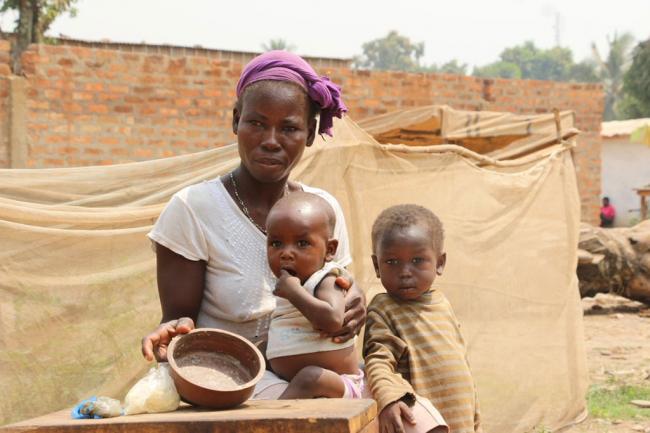
Photo: WFP/Bruno Djoye
Source: www.justearthnews.com
Support Our Journalism
We cannot do without you.. your contribution supports unbiased journalism
IBNS is not driven by any ism- not wokeism, not racism, not skewed secularism, not hyper right-wing or left liberal ideals, nor by any hardline religious beliefs or hyper nationalism. We want to serve you good old objective news, as they are. We do not judge or preach. We let people decide for themselves. We only try to present factual and well-sourced news.
Support objective journalism for a small contribution.


