

Rise in global tourism continues, despite concerns over safety and security: UN
International arrivals rose by 5 per cent in Europe, Asia and the Pacific, and the Middle East, and by 4 per cent in the Americas, according to figures released by the UN World Tourism Organization (UNWTO).
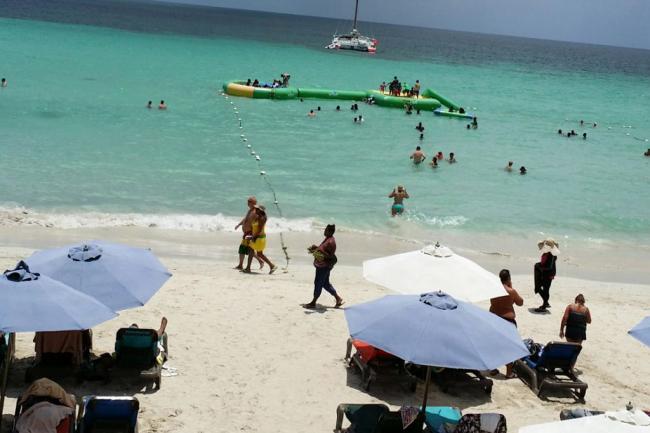
The most popular regions proved to be the Caribbean and Oceania, which saw a rise of seven per cent, while Central and Eastern Europe and Central America saw a rise of six per cent.
Although only limited data is available for Africa, it is thought that there has been an estimated 6 per cent decrease in the region, with a decline of 10 per cent in arrivals to North Africa and four per cent to Sub-Saharan Africa.
African destinations have been affected by terrorist attacks and the aftermath of the Ebola outbreak.
As well as safety and security concerns in some regions, the recovery of advanced economies and the slowdown of emerging ones have also affected tourism figures.
Lower oil prices and currency fluctuations, such as the weaker currency in the Euro area, have also played a part, says the Madrid-based UNWTO.
“These results show that, despite increased volatility, tourism continues to consolidate the positive performance it has had over the last five years and to provide development and economic opportunities worldwide,” said UNWTO Secretary-General Taleb Rifai.
“As UNWTO prepares to meet in Medellin, Colombia, for its 21st General Assembly, this is the appropriate moment to call for a stronger support to tourism as the sector has the potential to deliver on some of the most pressing challenges of our time, namely job creation, economic growth and social inclusion,” Rifai said.
In terms of outbound tourism, data for 2015 so far shows a mixed picture in spending overseas.
Among the emerging markets, China and India both started the year with double-digit growth in the first quarter.
Expenditure from Russia and Brazil reflected slow economic growth in both markets, as well as the depreciation of their currencies against both the United States dollar and the Euro.
Demand from the US, France, Sweden, and Spain remained strong, but was weaker in Germany, the United Kingdom, Italy, and Canada.
Photo: UN/Stan Reynolds
Support Our Journalism
We cannot do without you.. your contribution supports unbiased journalism
IBNS is not driven by any ism- not wokeism, not racism, not skewed secularism, not hyper right-wing or left liberal ideals, nor by any hardline religious beliefs or hyper nationalism. We want to serve you good old objective news, as they are. We do not judge or preach. We let people decide for themselves. We only try to present factual and well-sourced news.
Support objective journalism for a small contribution.