


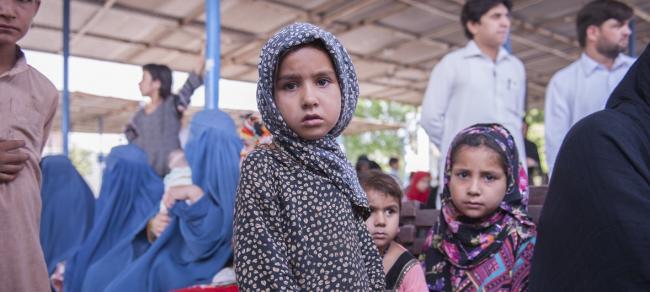
Returning home, Afghans continue to face challenges in rebuilding their lives – UN agencies
New York, Apr 13 (IBNS): In 2017, about 58,000 Afghan refugees voluntarily returned to their country after decades aboard only to be met with protection risks and “significant” barriers to long-term reintegration into society, two United Nations agencies working in the Asian country reported on Thursday.
The Office of the UN High Commissioner for Refugees (UNHCR) and the International Organization for Migration (IOM) said that despite efforts to support those coming back, the greatest challenge lies in a comprehensive, community-wide response that leaves no one behind.
“In spite of the inherent challenges of returning home after many decades abroad, IOM and UNHCR are working hand in hand to ensure sustainable solutions are provided to returning Afghans,” said Laurence Hart, the head of IOM operations in the country.
“[We] work together to complement each other’s efforts in areas of high return, with partners and the Government, for greater efficiency and to ensure support to those communities to mitigate protection risks,” added Fathiaa Abdalla, the head of the UNHCR office in Afghanistan.
Each year, registered Afghan refugees and undocumented Afghans make the decision to return home from Iran and Pakistan, in spite of the difficult situation in Afghanistan.
Since 2002, more than 5.24 million registered Afghan refugees have returned – more than 58,000 in 2017, according to a new, first of its kind, joint IOM-UNHCR report.
“Given the scope of the ongoing conflict, high levels of internal displacement, already overstretched services and difficulty finding jobs, returning Afghans face protection risks and significant barriers to sustainable reintegration,” said the two UN agencies.
UNHCR and IOM have been collaborating closely in the country to assist the returning refugees and undocumented migrants. Together with the Government, they have also been actively coordinating the provision of humanitarian post-arrival and reintegration assistance.
With estimates that 280,000 registered refugees and 420,000 undocumented Afghans expected to return in 2018, the two agencies are harmonizing their operations, in particular related to monitoring, reporting and analysis and developing key indicators for displacement and mobility tracking.
These estimates depend on a number of factors, including the situation in places of return as well as countries where the refugees and undocumented persons are staying in.
UNHCR/Insiya Syed
Support Our Journalism
We cannot do without you.. your contribution supports unbiased journalism
IBNS is not driven by any ism- not wokeism, not racism, not skewed secularism, not hyper right-wing or left liberal ideals, nor by any hardline religious beliefs or hyper nationalism. We want to serve you good old objective news, as they are. We do not judge or preach. We let people decide for themselves. We only try to present factual and well-sourced news.
Support objective journalism for a small contribution.


