


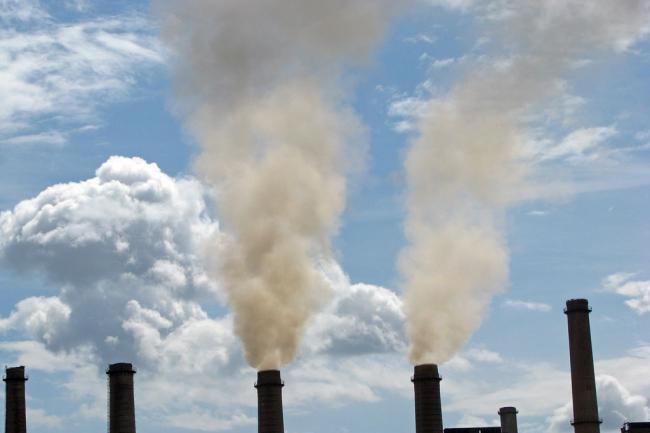
Polluted environments kill 1.4 million in Europe annually; UN agencies urge stepped-up action
“In the era of Sustainable Development, we can prevent the 1.4 million environment related deaths by making health a political choice across all government sectors,” said Dr. Zsuzsanna Jakab, World Health Organization Regional Director for Europe (WHO/Europe), at the opening of the Sixth Ministerial Conference on Environment and Health in Ostrava, Czech Republic.
European citizens annually lose 50 million years of healthy life due to environmental risks, corresponding to at least 15 per cent of Europe's total deaths – around half of which are due to outdoor and indoor air pollution.
“We urge all European leaders to take this opportunity for more sustainable policies to address the health challenges of the 21st century,” he underscored.
WHO/Europe, the UN Economic Commission for Europe (UNECE) and the UN Environment Programme (UNEP), joined approximately 500 representatives from the 53 countries of the European Region together with international and non-governmental organizations, to commit to prioritizing action on environmental risks to health.
“We have enough evidence. We have solutions at hand. What we need is action,” agreed Olga Algayerova, Executive Secretary of UNECE. “Examples of solutions developed over the past 20 years by UNECE and WHO/Europe with a proven track record include the Convention on Long-Range Transboundary Air Pollution, the Protocol on Water and Health and the joint Programme on Transport, Health and Environment. But we must do more to fulfil their potential to clean the air and water and promote smart cities and clean transport systeAnd while doing more, we must build on the synergies embedded in the Sustainable Development Goals.”
Environment-related non-communicable diseases
Environmental risk factors are responsible for around 26 per cent of ischemic heart disease, 25 per cent of strokes and 17 per cent of cancers in Europe. Cardiovascular deaths and diseases from environmental exposures are three times higher in low and middle income countries than in high income ones.
Air pollution is Europe's leading environmental killer, responsible for 620,000 deaths every year from both outdoor and indoor exposure.
“Successful cooperation among UNECE member States has led to significant reductions of air pollution in the region – thereby saving lives,” stressed Algayerova. “All recent studies show that this work needs to continue and be strengthened, and lessons learned should be shared with other regions,” she added.
Other environmental factors, such as chemical pollution, occupational risks and unsafe water and sanitation account for more deaths and diseases and road traffic injuries kill 85,000 people per year.
Extreme weather events from climate change, rapid urbanization and unprecedented levels of migration further exacerbate Europeans' health.
Investing in cities
By 2030, eight out of 10 Europeans will be living in cities, making them one of the main priorities in Europe's agenda at the Ministerial Conference.
A new WHO report, Environment and health for European Cities in the 21st century: making a difference, developed jointly with UNECE and UNEP, makes the case for investing in cities to improve people's health and reduce inequalities.
The Environment and Health Ministerial Conference in Ostrava, organized by WHO/Europe, in partnership with UNECE and UNEP is hosted by the Czech Republic and runs until 15 June.
Photo: World Bank/Lundrim Aliu
Source: www.justearthnews.com
Support Our Journalism
We cannot do without you.. your contribution supports unbiased journalism
IBNS is not driven by any ism- not wokeism, not racism, not skewed secularism, not hyper right-wing or left liberal ideals, nor by any hardline religious beliefs or hyper nationalism. We want to serve you good old objective news, as they are. We do not judge or preach. We let people decide for themselves. We only try to present factual and well-sourced news.
Support objective journalism for a small contribution.


