September 21, 2026 03:36 am (IST)

Follow us:


Philippines: UN works with communities to rebuild lives
New York, May 8 (IBNS): Six months after Typhoon Haiyan devastated the Philippines, while signs of recovery are starting to emerge, progress remains fragile, the United Nations on Wednesday said urging continued international support for the 14 million people affected.
“Our thoughts are very much with the survivors who suffered the loss of so many friends and loved ones,” the UN Resident and Humanitarian Coordinator ad interim for the Philippines, Klaus Beck, said in a message on behalf of the Humanitarian Country Team and Humanitarian Coordinator, Luiza Carvalho.
The UN humanitarian agencies and their partners in the Philippines are now prioritizing projects on shelter and livelihoods, while continuing to assist the most vulnerable people with assistance and protection services, he added.
Haiyan is the biggest typhoon recorded in almost a century, and according to the Office for the Coordination of Humanitarian Affairs (OCHA), it killed thousands and affected nearly 9.8 million people, displaced some 4 million people and destroyed 500,000 homes.
The storm also devastated the country’s infrastructure, hospitals, schools and public services, causing USD 12 billion in estimated damages.
“We have helped 133,000 households to build back,” Beck said, adding that support to assist an additional 380,000 households is now critical.
Funding for housing is part of the humanitarian community’s Strategic Response Plan (SRP), which at USD 788 million, is 56 per cent funded, according to the latest figures.
Meanwhile, in the central part of the country, tens of thousands of rice farmers are starting to bring in their harvests, having received certified rice seeds, fertilizer and tools within weeks of the disaster.
“When I saw the extent of the destruction and damage caused by the high winds and storm surge, I thought the situation was hopeless,” said rice farmer Lisa Canaber from Leyte Province, one of the worst-affected areas.
Her family was one of 44,000 to receive farm aid from the Department of Agriculture and the UN Food and Agriculture Organization (FAO).
“Had I not received the certified rice seed to plant in time for the December/January season, I would have needed to rely on external food aid for almost a whole year,” another farmer, Carmen Cinco, told FAO. “I am hopeful now. We are on the way to recovery.”
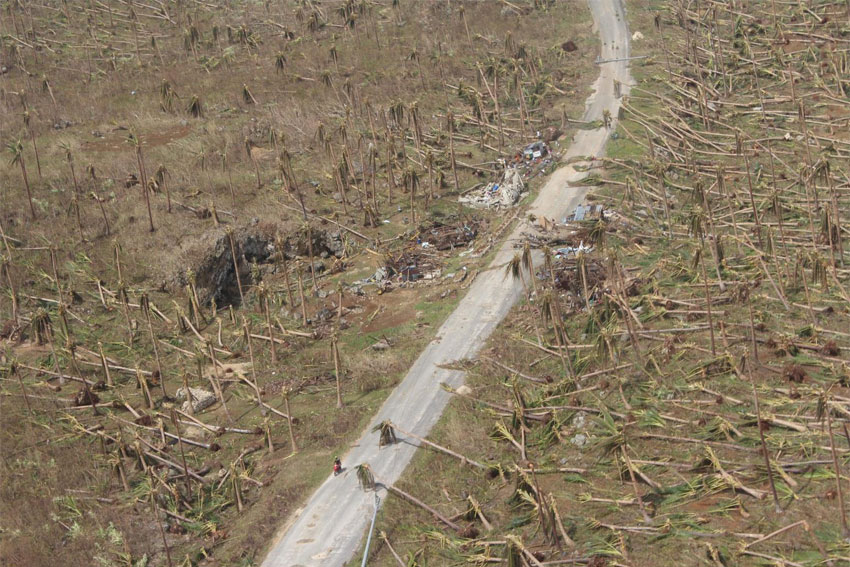
The agency is also working with coconut farmers who lost some 33 million trees to the storm. With a six to eight year wait for coconut trees to become productive again, the farmers are being given interim support to find alternative sources of livelihood – such as vegetable seeds, farm tools and livestock.
Farmers who relied on fishing are receiving sustainable fishing tools, while FAO is continuing to work with officials and local communities to repair the damaged coastal mangrove ecosystems.
Children are also receiving support to return to school, be immunized and have access to clean water.
“In spite of UNICEF’s [UN Children’s Fund] continued, intense response since Typhoon Haiyan hit six months ago, and clear progress being made, the work is far from complete,” said Lotta Sylwander, UNICEF Representative in the Philippines.
The agency and partners have so far helped to immunize more than 80,000 children, provide a million people with access to safe water, reached 25,000 children with support to help them overcome the traumas they faced, brought children back to school within the shortest possible time and provided 470,000 children with learning materials.
(11 November 2013, Eastern Samar, Philippines: Coconut trees knocked down by the storm, devastating the livelihood of the people in Eastern Samar. Credit: IOM/Conrad Navidad)
Support Our Journalism
We cannot do without you.. your contribution supports unbiased journalism
IBNS is not driven by any ism- not wokeism, not racism, not skewed secularism, not hyper right-wing or left liberal ideals, nor by any hardline religious beliefs or hyper nationalism. We want to serve you good old objective news, as they are. We do not judge or preach. We let people decide for themselves. We only try to present factual and well-sourced news.
Support objective journalism for a small contribution.



Latest Headlines
Italy PM Meloni announces big school plan: Burqa, hijab ban and cap on foreign students
Sun, Sep 20 2026
North Korea fires two missiles toward East Sea, South Korea confirms
Sun, Sep 20 2026
Houthis claim Saudi F-15 shot down as Mecca drone row escalates
Wed, Sep 16 2026