


Peace, human security at forefront of UN intercultural dialogue forum
The Fourth World Forum on Intercultural Dialogue, hosted by the Government of Azerbaijan in partnership with the UN Educational Scientific and Cultural Organization (UNESCO), will provide an opportunity to examine effective responses to challenges facing human security, including massive migration, violent extremism and conflicts.
The Forum brings together heads of government and ministers, representatives of intergovernmental organizations, the private sector, policy-makers, cultural professionals, journalists and civil society activists under the theme ‘Advancing Intercultural Dialogue – New avenues for human security, peace and sustainable development.’
Speaking to UN News, Nadia Al-Nashif, UNESCO Assistant Director General for Social and Human Sciences, said the Baku Forum has a “very strong vision and resonates deeply with UNESCO’s mandate to build peace in the minds of men and women.”
“The world has become a very complicated place,” she noted. “We are looking at huge innovations in technology but at the same time, we are facing increased tensions, a result of the lack of general trust that stems from how much insecurity there is in the world.”
Al-Nashif said the UN intercultural dialogue is a platform for people to debate the notion of coexistence and what that means in regards to the 2030 Agenda for Sustainable Development that seeks to “promote norms for social justice, advocate for social inclusion, integration, acceptance, and not just tolerance but empathy.”
UNESCO is hosting 13 sessions at the Forum, showcasing the agency’s diverse work on intercultural dialogue to address issues such as the integration of migrants in cities, countering violent extremism as well as the growth of youth radicalization on the Internet.
“This is not just an academic forum where we are just preaching to the converted,” underscored Al-Nashif. “We bring our UNESCO Chairs but also the focal points from cities and local authorities.”
The agency has been developing tools to help cities cope better with the flow of migrants into cities. A ministerial forum on culture and tourism is also scheduled to be held on the margins of the Baku Forum.
Furthermore, a number of its products will be launched on Friday, among them a research publication entitled “Interculturalism at a crossroads, comparative perspectives on concepts, policies and practices” an initiative by the UNESCO Chairs in Intercultural and Interreligious Dialogue; and two innovative online platforms: an e-Learning platform on intercultural competences financed with the support of Azerbaijan and another on the Muslim-Arab Legacy in the West.
“What the Baku Forum and UNESCO is doing,” Ms Al-Nashif said, “is finding a common access where we continue to engage, to inform scientific evidence for why it doesn’t make sense to be racist, why discrimination hurts socially and economically as well.”
Ahead of the Forum, the network of the UNESCO Silk Road Online Platform met at the Baku Congress Centre on Thursday, to examine progress made in its 2016-2018 Action Plan.
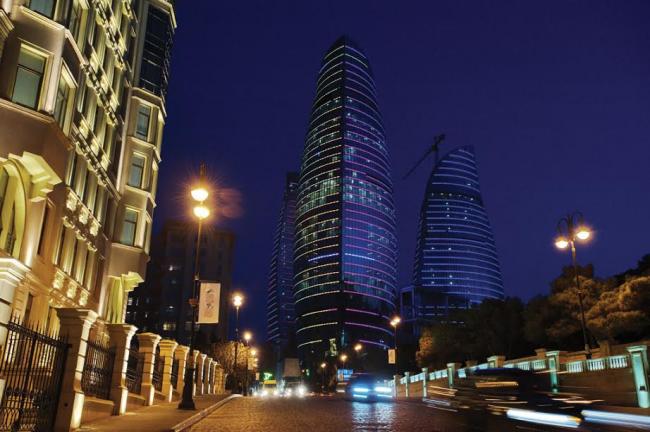
Photo: Ministry of Tourism and Culture, Azerbaijan
Support Our Journalism
We cannot do without you.. your contribution supports unbiased journalism
IBNS is not driven by any ism- not wokeism, not racism, not skewed secularism, not hyper right-wing or left liberal ideals, nor by any hardline religious beliefs or hyper nationalism. We want to serve you good old objective news, as they are. We do not judge or preach. We let people decide for themselves. We only try to present factual and well-sourced news.
Support objective journalism for a small contribution.


