


 Border Clashes
One Thai soldier, four Cambodian civilians killed as Thailand-Cambodia border clashes reignite
Bangkok/IBNS: Tensions on the Thailand–Cambodia border surged once more on Monday, as Thailand launched air strikes on Cambodian positions amid fresh accusations and counteraccusations of aggression.
The renewed hostilities, which authorities on both sides blamed on each other, have already killed four Cambodian civilians and one Thai soldier.
Thailand’s Second Army Region confirmed that around 35,000 residents have been evacuated from border districts following the latest burst of fighting.
Cambodia’s information ministry reported that more than 1,100 families fled from the frontier province of Oddar Meanchey.
Trump-backed fragile truce in tatters
This resurgence of violence comes just months after five consecutive days of clashes during the summer killed 43 people and displaced nearly 300,000 before a ceasefire took hold.
That fragile peace unravelled when Thailand suspended a follow-up agreement backed by US President Donald Trump, after a landmine explosion injured several Thai soldiers.
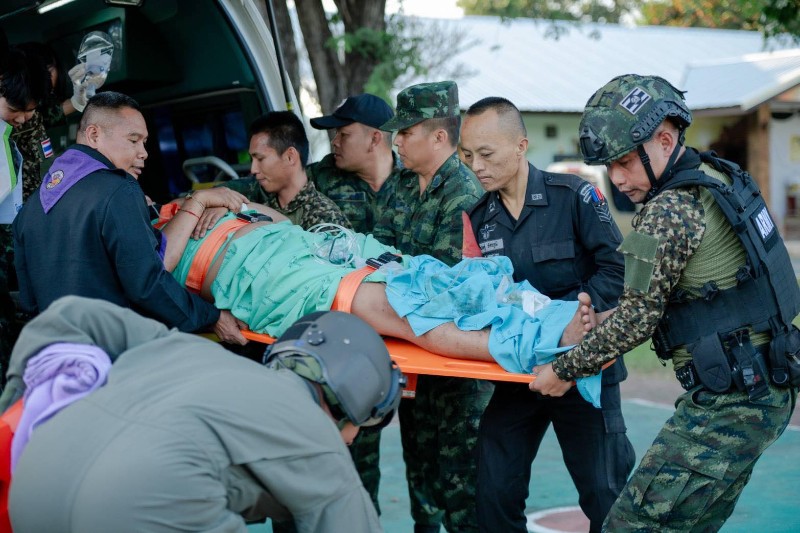 Photo: Facebook/@royalthaiarmyRTA
Since then, both governments have reported intermittent exchanges of fire.
These skirmishes intensified on Sunday and escalated into full-scale fighting by early Monday morning, driving thousands from their homes once again.
Thai air strikes and accusations of shelling
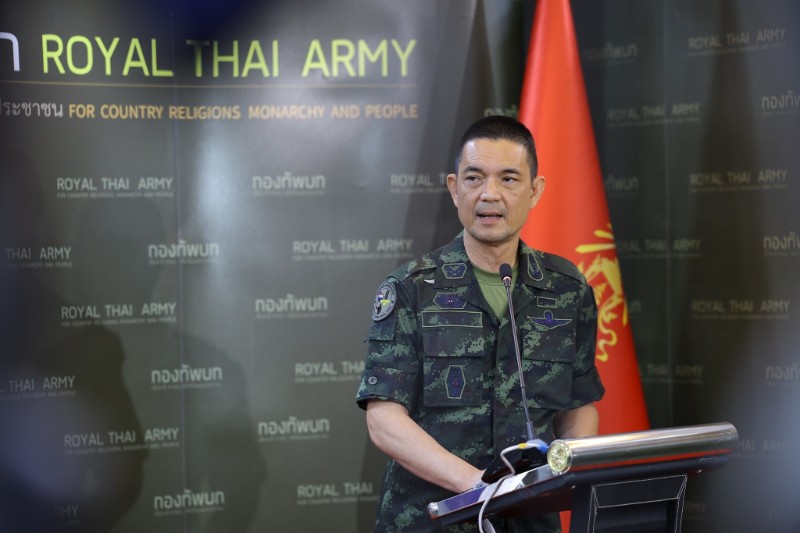
Thai Army spokesman Winthai Suvaree announced that air power was deployed strictly in “self-defence,” targeting what he described as Cambodian military positions along the contested border.
“The Thai air power is being used only against Cambodian military targets,” he said, insisting the strikes were “highly precise” and designed to halt Cambodian supporting fire that had caused Thai casualties.
However, Cambodia disputed this narrative.
Cambodian defence ministry spokeswoman Maly Socheata accused Thailand of launching attacks in the provinces of Preah Vihear and Oddar Meanchey, including strikes near the historic Tamone Thom temple.
She said an F-16 jet had struck Cambodian forces around 9 am, adding that Thai shelling wounded civilians and destroyed homes.
A Cambodian journalist was reportedly injured by shrapnel from a Thai rocket in Oddar Meanchey, according to information minister Neth Pheaktra.
Cambodian military sources also described continued Thai shelling across the frontier throughout Monday.
Thailand, meanwhile, accused Cambodia of firing BM-21 rockets toward populated areas in Buri Ram province, though there were no reported casualties.
A century-old dispute that refuses to fade
The renewed conflict revolves around border territory mapped during the French colonial era, with both nations claiming sovereignty over several ancient temple sites scattered across their 800-kilometre frontier.
The dispute sharply escalated in July when a Cambodian rocket barrage triggered a wave of retaliatory Thai air strikes.
A ceasefire brokered by Malaysian Prime Minister Anwar Ibrahim soon followed, culminating in an October agreement co-signed with US President Trump—a deal Trump hailed as a major diplomatic achievement.
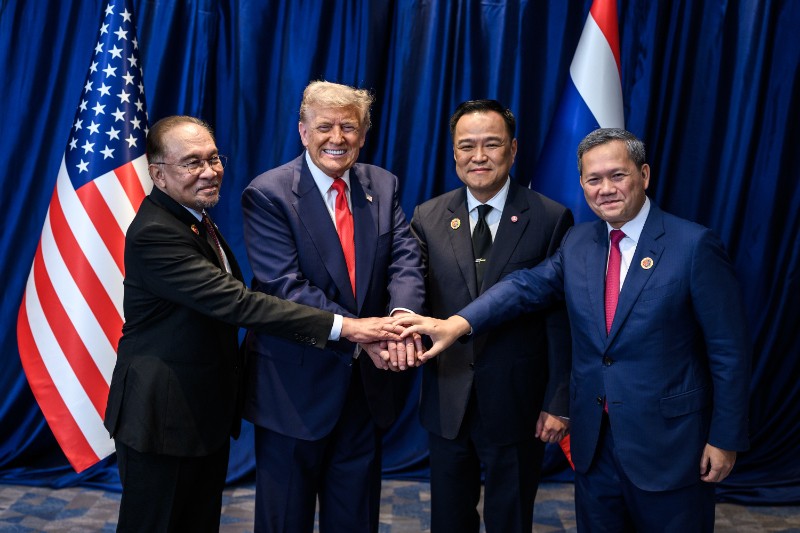 President Trump with Malaysian, Cambodian and Thai Prime Ministers before signing the Kuala Lumpur Accord, October 25, 2025. Photo: Wikimedia Commons/The White House
But within days, Thailand suspended implementation of the pact after two soldiers were injured by a landmine near the border. Since then, the ceasefire has effectively collapsed.
Cambodia, which nominated Trump for a Nobel Peace Prize for his mediation efforts, continues to claim it remains committed to the deal, despite escalating violence on the ground.
Global concern over rising tensions
Malaysia, the current ASEAN chair, called for restraint as the situation deteriorated.
Prime Minister Anwar Ibrahim urged both sides to step back from further confrontation.
“Our region cannot afford to see long-standing disputes slip into cycles of confrontation,” he warned, as border artillery exchanges continued to be reported around the centuries-old Tamone Thom and Ta Krabei temple zones.
For now, both countries remain locked in their historic territorial disagreement, with each new incident threatening to trigger wider regional instability.
Support Our Journalism
We cannot do without you.. your contribution supports unbiased journalism
IBNS is not driven by any ism- not wokeism, not racism, not skewed secularism, not hyper right-wing or left liberal ideals, nor by any hardline religious beliefs or hyper nationalism. We want to serve you good old objective news, as they are. We do not judge or preach. We let people decide for themselves. We only try to present factual and well-sourced news.
Support objective journalism for a small contribution.


