


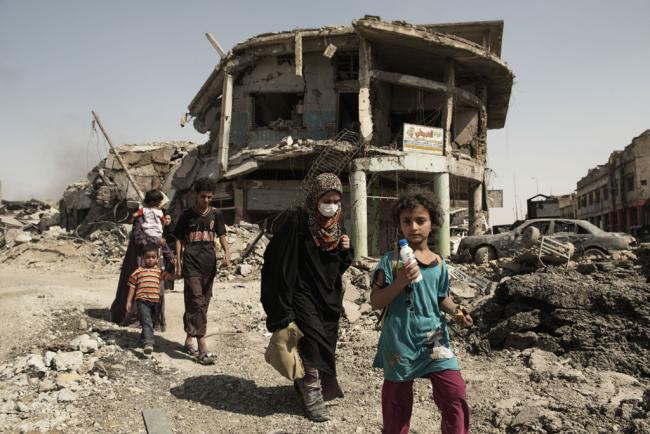
One in four Iraqi children impacted by conflict, poverty; education key for lasting peace – UNICEF
New York, Jan 20 (JEN): More than four million children have been impacted by extreme violence in Iraq, many robbed of their childhood and forced to fight on the frontlines, the United Nations Children’s Fund (UNICEF) said Friday.
“Last year alone, 270 children were killed,” said UNICEF Regional Director Geert Cappelaere following a recent visit.
“Some will bear the physical and psychological scars for life due to exposure to unprecedented brutality,” he added, pointing out that over one million children were forced to leave their homes.
Today, Iraq hosts one of UNICEF’s largest operations in the world, responding with humanitarian and development assistance to the needs of the most vulnerable girls and boys across the country.
Violence is not only killing and maiming children; it is destroying schools, hospitals, homes and roads. It is tearing apart the diverse social fabric and the culture of tolerance that hold communities together.
“In one of the schools that UNICEF recently rehabilitated in the western parts of Mosul, I joined 12-year-old Noor in class. She told me how her family stayed in the city even during the peak of the fighting. She spoke of her fear when she was taking shelter. She lost three years of schooling and is now working hard to catch up, learning English with other boys and girls,” Cappelaere
Poverty and conflict have interrupted the education for three million children across Iraq. Some have never been inside a classroom.
Over a quarter of all children in Iraq live in poverty, with children in southern and rural areas most affected over the past decades.
“As Iraq prepares for elections and the International Summit for Iraq, there is no better moment to prioritize the interests of children, stop the violence and break the cycle of poverty and deprivation,” stressed Mr. Cappelaere.
UNICEF appealed to authorities in Iraq and the international community to end all forms of violence so children and their families can live in safety and dignity; continue providing humanitarian and recovery assistance, including to those in camps and informal settlements; and massively step up immediate and long-term investments in education.
“The children of Iraq, like all children around, the world have the right to learn and aspire to a better tomorrow. The children of today are tomorrow’s teachers, doctors, engineers and scientists. Investing in them now is an investment in Iraq’s future,” he underscored.
The International Summit for Iraq, hosted by Kuwait from 12-14 February, offers an opportunity for Iraq and the international community to strengthen commitments to the country’s children – specifically by increasing budgets allocated to supporting children.
“Member States and the private sector should turn financial pledges into concrete commitments for children. This is fundamental for rebuilding a peaceful and prosperous Iraq away from the vicious cycles of violence and intergenerational poverty,” emphasized Cappelaere.
Photo: UNICEF/Romenzi
Support Our Journalism
We cannot do without you.. your contribution supports unbiased journalism
IBNS is not driven by any ism- not wokeism, not racism, not skewed secularism, not hyper right-wing or left liberal ideals, nor by any hardline religious beliefs or hyper nationalism. We want to serve you good old objective news, as they are. We do not judge or preach. We let people decide for themselves. We only try to present factual and well-sourced news.
Support objective journalism for a small contribution.


