


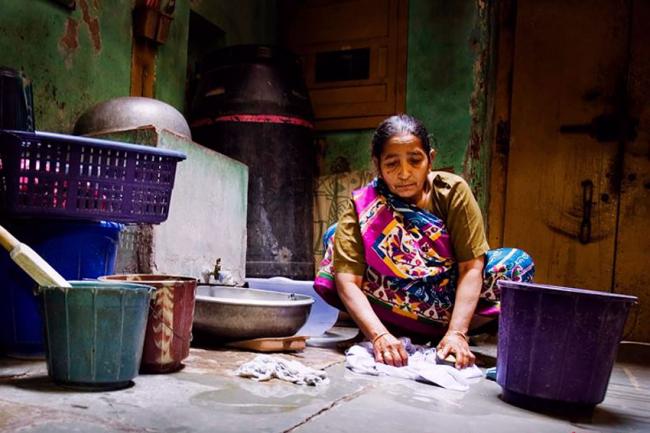
On International Day, UN spotlights need to combat forced labour, particularly of children
“Those suffering multiple forms of discrimination, including women, children, indigenous peoples, minorities, people of African descent, and persons with disabilities, all too often face extreme vulnerability to exploitation and abuse,” said UN Secretary-General Ban Ki-moon in his message on the International Day for the Abolition of Slavery.
Further noting that the 2030 Agenda and the UN Sustainable Development Goals (SDGs) call for immediate steps to eradicate forced labour, human trafficking and the worst forms of child labour; and to end all forms of child labour, by 2025, the UN chief added: “Achieving this goal is not only a matter of prohibiting slavery in law throughout the world but also fighting its root causes, expanding access to justice for victims and increasing provisions for rehabilitation.”
Ban also urged increased contributions to the UN Voluntary Fund on Contemporary Forms of Slavery that supports thousands of victims (and their families) who have been deprived of their human rights and dignity.
Similarly, in a separate message, Guy Ryder, the Director-General of the International Labour Organization (ILO), highlighted that experience had shown that ending slavery and forced labour required a balanced and integrated approach.
According to the ILO, there are some 21 million people, including children, trapped in forced labour around the world, generating $150 billion in illicit profits for those who exploit them.
“Forced labour takes many forms, including commercial sexual exploitation, debt bondage or traditional slavery, and is present in many sectors, such as agriculture, construction, domestic work or fishing,” Ryder said.
He, however, said that he was encouraged by growing global attention on slavery and stressed that that this brought to light not only the circumstances in which people are trapped, but also that regional and national frameworks need to be strengthened in order to fight this scourge.
The International Day for the Abolition of Slavery, commemorated on 2 December, marks the date of the adoption, by the General Assembly, of the UN Convention for the Suppression of the Traffic in Persons and of the Exploitation of the Prostitution of Others.
This year’s observance also coincides with the 90th anniversary of the signing of the 1926 Slavery Convention, and the 60th anniversary of the 1956 Supplementary Convention on the Abolition of Slavery, the Slave trade and Institutions and Practices Similar to Slavery.
Also, ILO’s Forced Labour Protocol,adopted in 2014, entered into force this November. The Protocol has strong provisions on remedies and compensation, making it less profitable to those who may result to the use of forced labour.
Photo: ILO
Source: www.justearthnews.com
Support Our Journalism
We cannot do without you.. your contribution supports unbiased journalism
IBNS is not driven by any ism- not wokeism, not racism, not skewed secularism, not hyper right-wing or left liberal ideals, nor by any hardline religious beliefs or hyper nationalism. We want to serve you good old objective news, as they are. We do not judge or preach. We let people decide for themselves. We only try to present factual and well-sourced news.
Support objective journalism for a small contribution.


