


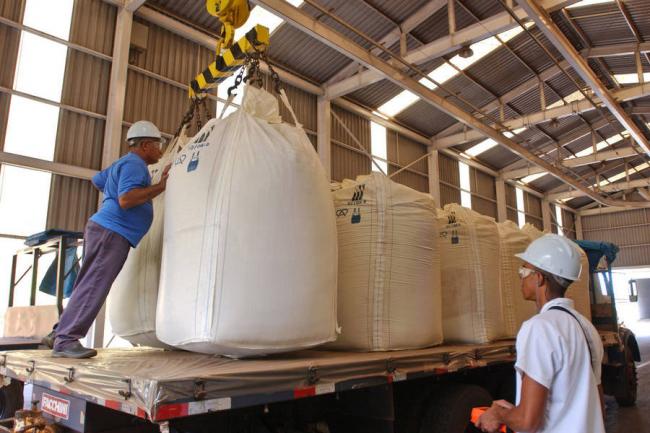
Most workers now employed in part-time or temporary jobs: UN labour agency
The ILO flagship annual report, World Employment and Social Outlook 2015 representing 84 per cent of the global workforce, also notes that women are disproportionately represented among those in temporary and part-time forms of wage and salaried employment.
ILO Director-General Guy Ryder said, “These new figures point to an increasingly diversified world of work. In some cases, non-standard forms of work can help people get a foothold into the job market."
"But these emerging trends are also a reflection of the widespread insecurity that's affecting many workers worldwide today,” Ryder added.
“The shift we're seeing from the traditional employment relationship to more non-standard forms of employment is in many cases associated with the rise in inequality and poverty rates in many countries,” added Ryder.
This year's re, entitled The Changing Nature of Jobs, shows that only one quarter of workers worldwide is estimated to have a stable employment relationship.
The report also notes that while wage and salaried work is growing worldwide, it still accounts for only half of global employment, with wide variations across regions.
“For example, in the developed economies and Central and South-Eastern Europe, around eight in ten workers are employees, whereas in South Asia and Sub-Saharan Africa the figure is closer to two in ten,” it said.
“Another current trend is the rise in part-time employment, especially among women. In the majority of countries with available information, part-time jobs outpaced gains in full-time jobs between 2009 and 2013,” according to the report.
Only one quarter of workers worldwide is estimated to have a stable employment relationship, meaning that three quarters of workers are employed on temporary or short-term contracts, in informal jobs often without any contract, under own-account arrangements or in unpaid family jobs, the report's findings show.
At a time when the global economy is not creating a sufficient number of jobs, the study reports that more than 60 per cent of all workers lack any kind of employment contract, with most of them engaged in 'own-account work' or contributing family work in the developing world.
“Even among wage and salaried workers, less than half (42 percent) are working on a permanent contract,” it said.
The report also found that income inequality is increasing or remains high in the majority of countries – a trend that is aggravated by the rising incidence of non-permanent forms of employment, growing unemployment and inactivity.
And despite the positive steps made towards improving pension coverage, social protection, such as unemployment benefits, is still mainly available only for regular employees.
For the self-employed, even pensions are scarce: in 2013, only 16 per cent of the self-employed contributed to a pension scheme.
“There is a growing recognition that labour regulation is necessary to protect workers – especially those in non-standard work – from arbitrary or unfair treatment and to enable effective contracts between employers and workers,” the report's authors wrote.
They also wrote, “Employment protection laws have been very gradually strengthening over time, a trend that is common across most countries and regions. However, in Europe, labour protection has generally decreased since 2008 when the global financial crisis started.”
The report also looks at the increasing importance of global supply chains in shaping some of the employment and income patterns that are observed in labour markets today.
“An estimate based on some 40 countries with available data finds that more than one in five jobs worldwide is linked to global supply chains,” the report says.
It also said, “That is, jobs that contribute to the production of goods and services that are either consumed or further processed in other countries.”
ILO estimates that global unemployment figures reached 201 million in 2014, over 30 million higher than before the start of the global crisis in 2008.
“Moreover, providing jobs to more than 40 million additional people who enter the global labour market every year is proving to be a daunting challenge,” the report's authors conclude.
It concluded, “In addition to widespread joblessness, the employment relationship itself is facing a major transformation that is bringing further challenges.”
“The way forward is to ensure that policies take into consideration the evolution of how we work today,” said Ryder, explaining that this means stimulating investment opportunities to boost job creation and productivity, while ensuring adequate income security to all types of workers, not just those on stable contracts.
Photo: FAO/Giuseppe Bizzarri
Support Our Journalism
We cannot do without you.. your contribution supports unbiased journalism
IBNS is not driven by any ism- not wokeism, not racism, not skewed secularism, not hyper right-wing or left liberal ideals, nor by any hardline religious beliefs or hyper nationalism. We want to serve you good old objective news, as they are. We do not judge or preach. We let people decide for themselves. We only try to present factual and well-sourced news.
Support objective journalism for a small contribution.


