


Mobile broadband subscriptions on track to hit 4.3 billion in 2017 – UN report
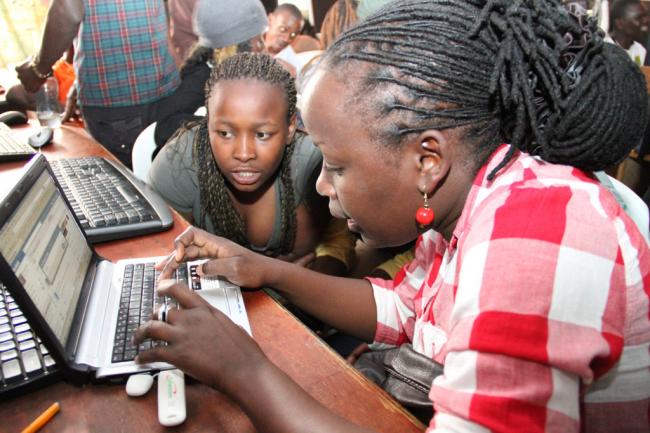
New data from the International Telecommunication Union (ITU) also show that 48 per cent of the world's population now uses the Internet. The proportion is 71 per cent for the group of young people aged 15-24.
“ITU's ICT Facts and Figures 2017 shows that great strides are being made in expanding Internet access through the increased availability of broadband networks,” said ITU Secretary-General Houlin Zhao in a press release.
“Digital connectivity plays a critical role in bettering lives, as it opens the door to unprecedented knowledge, employment and financial opportunities for billions of people worldwide,” he added.
Of the 830 million young people online worldwide, 320 million, or 39 per cent, are in China and India, the report finds.
Youth at forefront of Internet adoption
In the least developed countries (LDCs), 35 per cent of the individuals using the Internet are young people aged 15-24, compared with 13 per cent in developed countries and 23 per cent globally.
In developed countries, 94 per cent of the youth population uses the Internet, while the proportion is 67 per cent in developing countries and only 30 per cent in LCDs.
The report also reveals that mobile broadband subscriptions have grown more than 20 per cent globally in each of the last five years.
Between 2012 and 2017, the LDCs saw the highest growth-rate of mobile broadband subscriptions. However, the number of mobile subscriptions per 100 inhabitants in these countries remained the lowest, at 23 per cent.
The number of fixed-broadband subscriptions has increased by nine per cent annually in the last five years.
There has been an increase in high-speed fixed broadband subscriptions parallel to the growth in the number of fibre connections. Most of the increase in high-speed fixed broadband subscriptions in developing countries can be attributed to China, which accounts for 80 per cent of all fixed-broadband subscriptions at 10 Mbit/s or above in the developing world.
Mobile broadband prices, as a percentage of gross national income per capita, dropped by half between 2013 and 2016.
Mobile broadband is more affordable than fixed broadband in most developing countries.
Digital gender divide
While the Internet user gender gap has narrowed in most regions since 2013, the proportion of men using the Internet remains slightly higher than the proportion of women using the Internet in two-thirds of countries worldwide.
In 2017, the global Internet penetration rate for men stands at 50.9 per cent compared to 44.9 percent for women.
In the Americas, the number of women using the Internet is higher than that of men.
ICTs for sustainable development
The report demonstrates that ICTs continue to play an increasingly critical role in achieving the global Sustainable Development Goals (SDGs).
“ICTs continue to be a key enabler of economic and social development, bridging the digital divide and fostering an inclusive digital economy,” ITU Telecommunication Development Bureau Director Brahima Sanou.
The World Telecommunication Development Conference 2017 will take place 9 to 20 October in Buenos Aires, Argentina, under the theme 'ICT for Sustainable Development Goals.'
UNFPA/Roar Bakke Sorensen (file)
Source: www.justearthnews.com
Support Our Journalism
We cannot do without you.. your contribution supports unbiased journalism
IBNS is not driven by any ism- not wokeism, not racism, not skewed secularism, not hyper right-wing or left liberal ideals, nor by any hardline religious beliefs or hyper nationalism. We want to serve you good old objective news, as they are. We do not judge or preach. We let people decide for themselves. We only try to present factual and well-sourced news.
Support objective journalism for a small contribution.


