


Mauritania: UN expert welcomes new anti-slavery law
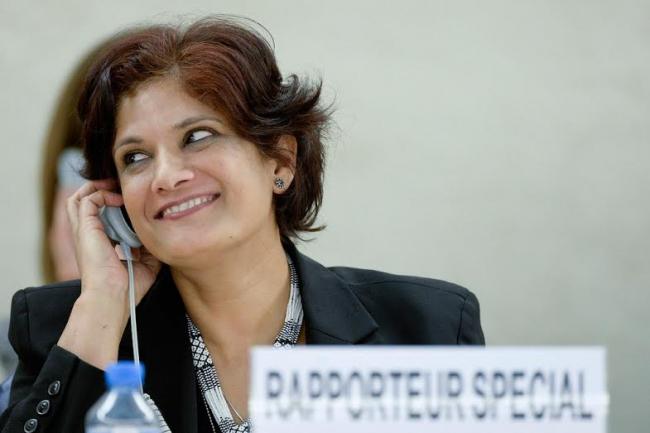
Special Rapporteur Urmila Bhoola, appointed by the UN Human Rights Council to monitor and report on contemporary forms of slavery, including its causes and consequences, said today in a press release that slavery and slavery-like practices can be eradicated only if the existing laws, policies and programmes are implemented fully and effectively.
The Special Rapporteur commended the Mauritanian Government for taking this important step towards replacing the 2007 anti-slavery law, which proved to be ineffective in terms of prosecution.
Commenting on the new anti-slavery legislation adopted by the Mauritanian National Assembly last week, Bhoola hailed it for giving civil society organizations the right to lodge legal complaints on behalf of the victims – but noted that legal requirements might impede some from doing so. While the law also foresees free legal assistance and refers to victims’ right to reparation, it does not elaborate on modalities.
The rights expert noted that, despite some shortcomings, the new legislation exhibited the Government’s commitment to implement the road map adopted by the Council of Ministers in March 2014 to eradicate contemporary forms of slavery.
“It is necessary that the implementing legislation regarding special tribunals adopts a rights-based approach, including by ensuring the right to an effective access to justice for all victims,” emphasized the Special Rapporteur.
Bhoola highlighted the need for “a holistic approach to eradicating slavery, combining the criminal law approach with measures aimed at addressing root causes of contemporary forms of slavery and programmes for victim protection, assistance and socio-economic integration with a view of providing them with alternative livelihoods.”
The expert called on Mauritania to step up its efforts to implement the road map and its national action plan – drawing on recommendations made by the previous Special Rapporteur following her official 2009 country visit.
Bhoola offered technical assistance to the country and called for resources to tackle slavery and slavery-like practices, including by the international community.
Support Our Journalism
We cannot do without you.. your contribution supports unbiased journalism
IBNS is not driven by any ism- not wokeism, not racism, not skewed secularism, not hyper right-wing or left liberal ideals, nor by any hardline religious beliefs or hyper nationalism. We want to serve you good old objective news, as they are. We do not judge or preach. We let people decide for themselves. We only try to present factual and well-sourced news.
Support objective journalism for a small contribution.


