


Last group of Congolese refugees return to their homes in DR Congo:UN
A convoy of 81 refugees crossed into the DRC from the Republic of the Congo last week “marking the end of five years in exile for the group,” said UNHCR spokesperson Ariane Rummery.
In 2009, some 160,000 people fled Equateur province to neighbouring Republic of Congo and the Central African Republic. They were fleeing clashes that erupted between the Munzaya and Enyele communities over traditional fishing and farming rights in the area.
Since then, they have been living in isolated areas along a 600-kilometre stretch of the Oubangui River, which separates Republic of Congo from the DRC.
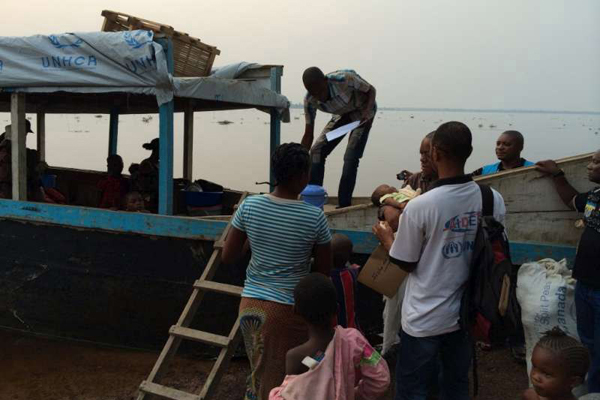
Local boats last Wednesday took the refugees across the Oubangui from the town of Betou in Republic of Congo to UN-run reception centres back into the province they had once fled.
Upon their arrival, UNHCR and the Government provided returnees with identity documents, as well as information on reintegration assistance. The UN agency also gave returnees a cash grant for travel to their final destinations and to help them settle.
Once home, each family receives an aid package on arrival and initiating reintegration activities to ensure a sustainable return, including health care and education programmes. The UN agency is also supporting awareness campaigns to promote peaceful coexistence among communities in the Libenge and Kungu territories, such as a community radio station in the town of Dongo.
“But such modest programmes might not be enough to ensure the stability of that now peaceful region,” Rummery said, calling for further local and national involvement.
She also called for the engagement of development actors to develop the remote region which remains vulnerable to further conflict over scarce resources.
In New York, the Security Council will on Thursday discuss the situation in the DRC in a high-level debate to be presided by the UK Minister for Africa, Mark Simmonds. The UK currently has the rotating presidency of the Council.
In addition, the Special Representative of the Secretary-General for the DRC and head of the UN peacekeeping mission there (MONUSCO), Martin Kobler, will participate in the briefing. As will the exiting Special Envoy to the Great Lakes Region, Mary Robinson.
Refugees disembark from the boat that has brought them back home across the Oubangui River to the Democratic Republic of the Congo (DRC). Photo: UNHCR/G. Diasivi
Support Our Journalism
We cannot do without you.. your contribution supports unbiased journalism
IBNS is not driven by any ism- not wokeism, not racism, not skewed secularism, not hyper right-wing or left liberal ideals, nor by any hardline religious beliefs or hyper nationalism. We want to serve you good old objective news, as they are. We do not judge or preach. We let people decide for themselves. We only try to present factual and well-sourced news.
Support objective journalism for a small contribution.


