


 Israel-Hamas
Israel-Gaza crisis: Competing Security Council resolutions reveal diplomatic fault lines
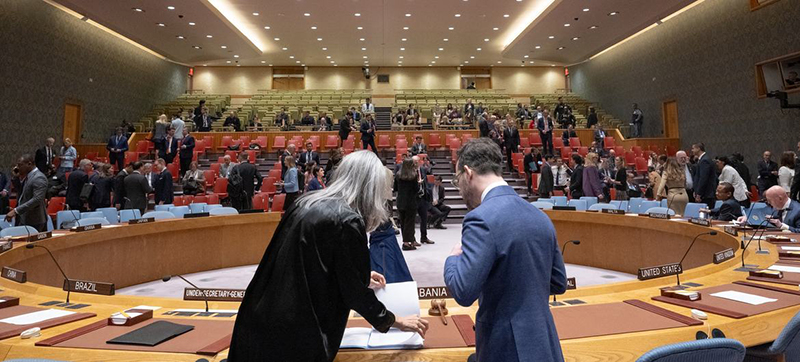
The UN Security Council’s first intervention in the Gaza crisis – a Russian-led draft resolution calling for humanitarian ceasefire – was voted down on Monday. Despite this setback, diplomatic efforts are in full swing as ambassadors prepare to consider another text on the unprecedented crisis.
The 15-member body that oversees peace and security issues, is expected to decide on a second draft resolution later on Tuesday, led by Brazil.
While it does not officially represent the position of the Council until adopted, this proposal aims to mitigate ongoing humanitarian suffering on the ground, establish corridors for safe aid delivery, as well as protect UN and other humanitarian workers who are struggling to provide lifesaving aid to the people of Gaza.
Key differences
While both texts seek a humanitarian pause, there are key differences, including reportedly over the major point of contention in the Russian draft – explicit mention of the extremist group Hamas which controls Gaza.
Russia’s ambassador told the emergency meeting on Monday, Western powers opposing their resolution had “stomped” on hopes of de-escalation, while the US ambassador said in failing to condemn Hamas, Russia was “giving cover to a terrorist group that brutalizes innocent civilians.”
In the hope of agreeing on unified action – never more important than during a time of international crisis – ambassadors usually seek to build support through resolutions, laying out a clear path.
Rival or parallel drafts of resolutions are common, leaving delegations to hammer out the details and soften the edges, often behind closed doors.
If common positions can’t be reached, the draft goes for a vote, where it either passes, or – as on Monday night – is rejected.
UN chief to visit region
Meanwhile, UN officials continue to engage with all actors involved in the widening crisis, to de-escalate tensions, establish safe zones, and provide essential aid and medical support to those in urgent need.
Secretary-General António Guterres is set to arrive in Egypt on Thursday to meet President Abdel Fattah Al Sisi and others.
World leaders are also making appeals to de-escalate, with the White House announcing President Joe Biden’s high stakes visit to Israel and Jordan beginning on Wednesday, in a show of solidarity with partners in the region.
A crisis erupts
UN and other humanitarian agencies have worked round the clock to preposition aid since the latest war between Israel and Hamas broke out following the militant group’s surprise 7 October attack on several locations inside Israel, and Israel’s subsequent declaration of war.
Thousands have reportedly been killed on both sides and hundreds of thousands have been forced to flee south inside Gaza, where the southern frontier remains closed so far to vital aid.
UN staff, primarily with the Palestine refugees agency UNRWA, as well as medical personnel and aid workers, have also lost their lives.
Concerns loom over the potential for the violence to spill over into neighbouring countries, destabilizing the entire region – and beyond.
Support Our Journalism
We cannot do without you.. your contribution supports unbiased journalism
IBNS is not driven by any ism- not wokeism, not racism, not skewed secularism, not hyper right-wing or left liberal ideals, nor by any hardline religious beliefs or hyper nationalism. We want to serve you good old objective news, as they are. We do not judge or preach. We let people decide for themselves. We only try to present factual and well-sourced news.
Support objective journalism for a small contribution.


