


ISIL advance on Iraqi town unleashes new flood of displacement, warns UN agency
In a news release issued from Geneva, the Office of the UN High Commissioner for Refugees (UNHCR) reported that an estimated 180,000 people had fled Hit, located in Iraq’s Anbar province, as ISIL fighters stormed the city, long considered a safe haven by many already fleeing the violence from other areas of the region. Many of those displaced were now sheltering with relatives and friends as well as in schools, mosques and public shelters already overwhelmed by Iraq’s mounting population of displaced persons.
“Until recently, Hit had been a safe haven for those who had fled earlier waves of violence in Ramadi, Fallujah and other parts of Anbar, providing shelter for some 100,000 displaced people,” the UNHCR statement noted, adding that the latest “exodus” from Hit represented “the fourth major wave of displacement in less than a year in Iraq.”
“Tens of thousands of desperate Iraqis are now caught is a rolling wave of multiple displacement amidst the conflict’s shifting frontlines.”
In one instance, UNHCR field staff met with a 30-year-old woman who had just fled from Hit with her elderly mother and disabled brother. The family had been displaced three times since January, fleeing ISIL’s advance throughout Anbar. Similarly, another 27-year-old woman with two young children escaped from the militants’ advance, fearing the impact of ISIL’s rule.
The two women and their families, the agency noted, joined the burgeoning ranks of those internally displaced in the area, including the estimated 1.8 million citizens internally displaced throughout the country in 2014 alone.
The news release also cited UNHCR spokeswoman, Melissa Fleming, as saying that the refugee agency was doing “its best to help, but the situation for all UN workers and partners on the ground was extremely difficult” amid the violence and massive displacement.
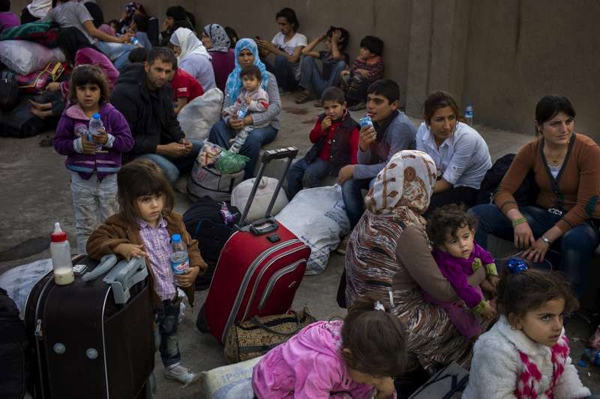
At the same time, the refugee agency warned that some 5,400 Syrian refugees fleeing the ISIL onslaught on the Syrian border town of Kobane had also entered Iraq from Turkey with another 10,000 to 15,000 expected to join them in the coming days. The refugees cited a number of reasons for leaving Turkey for Iraq, including civil unrest, the high cost of living, difficulties with aid, and the desire to join family members already living in the Kurdistan region of Iraq.
Although Iraqi border officials were screening the refugees as they crossed into the country, UNHCR protection teams had already set up a reception tent to accommodate refugees as they were processed and were assisting authorities in identifying “particularly vulnerable people,” the agency said.
Syrian Kurds from the town of Kobane seeking shelter in Iraq's Kurdistan region. Photo: UNHCR/D. Nahr
Support Our Journalism
We cannot do without you.. your contribution supports unbiased journalism
IBNS is not driven by any ism- not wokeism, not racism, not skewed secularism, not hyper right-wing or left liberal ideals, nor by any hardline religious beliefs or hyper nationalism. We want to serve you good old objective news, as they are. We do not judge or preach. We let people decide for themselves. We only try to present factual and well-sourced news.
Support objective journalism for a small contribution.


