


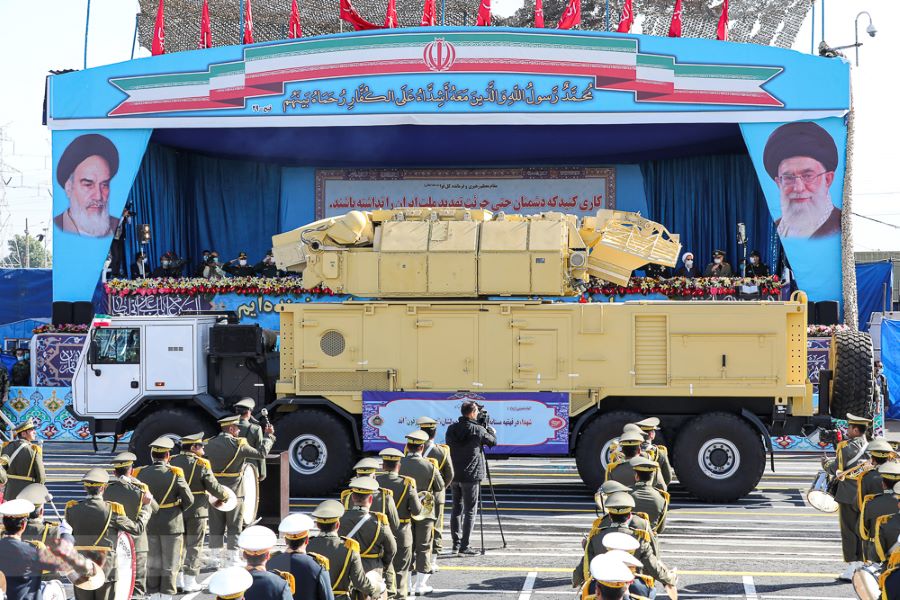
Iran warns oil-rich US allies in Gulf against helping Israel: Report
Iran has issued a stern warning to its Arab neighbours and U.S. allies in the Gulf, threatening severe retaliation if their territories or airspace are used to assist Israel in any potential strikes against Iran, according to The Wall Street Journal.
The warning, conveyed through secret diplomatic channels, was directed at oil-rich nations like Saudi Arabia, the United Arab Emirates, Jordan, and Qatar, all of which host U.S. military forces, the WSJ reported.
This follows Israel's vow of a strong reprisal against Tehran after an Iranian ballistic missile attack targeted Israel earlier this month.
Enraged by the assault, Israeli officials have advocated for retaliatory strikes on Iran's nuclear or oil facilities, which they view as vital to weakening Tehran's aggressive military stance.
In response, Iran has pledged to retaliate, threatening Israel's civilian infrastructure as well as Arab states that may assist in an Israeli or U.S.-led attack.
According to The Wall Street Journal, several Gulf nations have communicated to the Biden administration their reluctance to be drawn into a wider conflict by allowing the use of their military infrastructure or airspace for strikes against Iran.
Officials in these energy-rich states fear that their oil facilities, which have traditionally been seen as under U.S. protection, could become prime targets if hostilities escalate.
With a large number of American troops stationed in the region, any military action could also put U.S. forces at significant risk.
A major concern for the Gulf states is the potential impact on the global oil market if the conflict intensifies.
A full-scale war between Israel and Iran could disrupt oil exports passing through the Strait of Hormuz, a crucial chokepoint for global energy supplies.
Any disruption in oil flow could lead to a surge in energy prices, destabilizing both the region and global markets.
According to the WSJ, Arab leaders, including those from Saudi Arabia and the UAE, have pledged not to involve themselves in potential military strikes against Iran, fearing the consequences for their oil infrastructure.
In response to the rising tensions, the U.S. imposed new sanctions on Iran's oil and petrochemical sectors, targeting Iran's so-called "shadow fleet" of ships involved in evading sanctions.
The U.S. Treasury and State Departments sanctioned multiple companies and vessels engaged in the transportation of Iranian petroleum, as part of a broader strategy to cut off financial support for Iran's missile programs and regional militias.
"Today's sanctions target Iranian efforts to channel revenues from its energy industry to finance deadly and disruptive activity, including the development of its nuclear program and ballistic missile proliferation," U.S. Treasury Secretary Janet Yellen said in a statement.
The increasing tensions are further complicating the already fragile alliances between Arab states and Israel.
While these nations share a common goal of countering Iran's influence, they are cautious about becoming involved in a direct military confrontation that could escalate across the region.
Some Arab countries, like Jordan, have previously cooperated with Israel and the U.S. by intercepting Iranian projectiles aimed at Israel earlier this year.
However, supporting a full-scale Israeli strike on Iran is considered a far riskier move.
Support Our Journalism
We cannot do without you.. your contribution supports unbiased journalism
IBNS is not driven by any ism- not wokeism, not racism, not skewed secularism, not hyper right-wing or left liberal ideals, nor by any hardline religious beliefs or hyper nationalism. We want to serve you good old objective news, as they are. We do not judge or preach. We let people decide for themselves. We only try to present factual and well-sourced news.
Support objective journalism for a small contribution.


