


Identify and address ‘real needs’ to recover from COVID-19, UN rights expert urges
New York: There is no doubt that the COVID-19 pandemic resulted in “a serious setback” for the 2030 Agenda for Sustainable Development, an independent UN human rights expert said on Wednesday, urging a high-level meeting to “take a hard look” at implementation efforts to live up to the promise to leave no one behind.
“One of the main reasons implementation of the SDGs [Sustainable Development Goals] continues to lag behind is that policies and programmes fail to identify and address people’s real needs”, Saad Alfarargi, Special Rapporteur on the right to development, said at the second day of the High-Level Political Forum on Sustainable Development (HLPF).
“If efforts to achieve the goals are not based on these needs, they cannot succeed”, he spelled out.
‘Marginalized, disempowered and excluded’
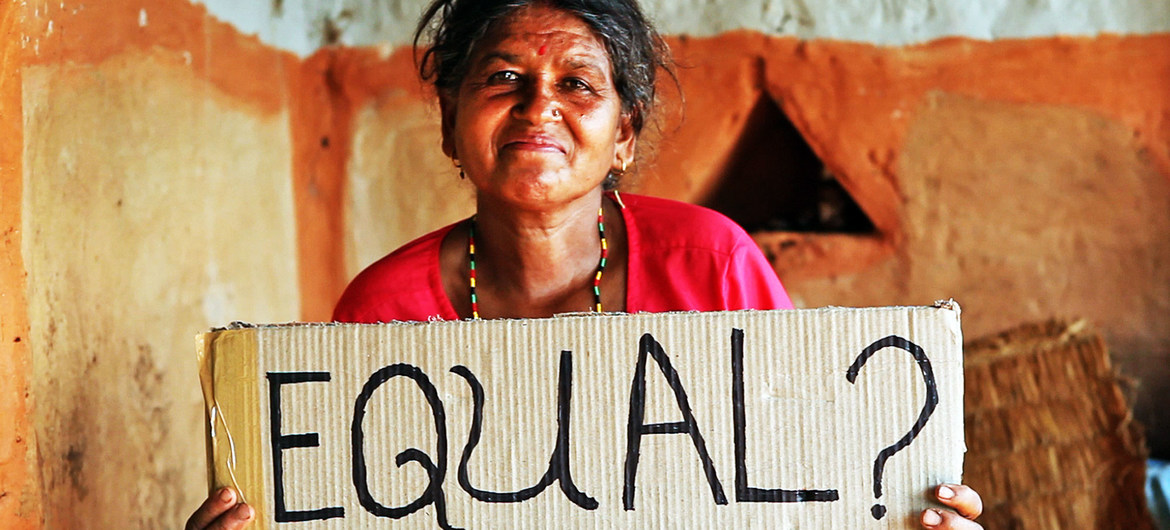
The UN rights expert maintained that those denied during past development efforts remain “marginalized, disempowered and excluded”, including many women, racial, religious and ethnic minorities, and those impoverished and displaced.
“Unless we address the inequalities, exclusion and entrenched discrimination these communities face, durable and inclusive development for all will remain elusive”, he underscored.
The right to development entitles every human being and all peoples to participate in, contribute to and enjoy economic, social, cultural and political development.
Ensuring meaningful participation means placing them at the centre of decision-making that affects their own development.
Removing barriers
To achieve sustainable results, development must be a holistic process involving everyone who has a stake – from States, to international organizations and civil society, to marginalized populations.
Alfarargi told the participants that priorities must be set by the people who should benefit most, saying “communities must set development agendas, budgets and processes”.
“It is, therefore, essential to remove visible and invisible barriers that hinder community participation, such as lack of legal identity, high financial cost or social restrictions, to ensure that the whole of society benefits from development”, he stated.
This means that States need to “institute and budget for planning processes and monitoring mechanisms that enable everyone to participate”, including civil society, the Special Rapporteur added.
Moving forward
Business as usual is not going to deliver results: “In recent decades, economic growth has been accompanied by increasing or persistently high levels of inequality within countries and a call for fundamental reconfiguration in economic policymaking”, Mr. Alfarargi noted.
The current crisis provides an opportunity to those involved in development to “take a hard look” at the ways they identify those left behind, “including their efforts to mitigate the damage inflicted by the pandemic”, the UN expert (CAN’T CALL HIM AN ENVOY, HE’S AN EXPERT) continued.
Efforts must also resonate with the real and actual needs of the most marginalized parts of the society.
Further action
The Special Rapporteur informed the meeting that his reports to the Human Right Council (HRC) and the UN General Assembly this year are devoted to development finance.
“I am issuing a number of recommendations to all stakeholders on resource mobilization, tax policies and ensuring meaningful participation I development finance”, he concluded with an offer to discuss further.
Background information
Under the auspices of the Economic and Social Council, the HLPF on sustainable development will run until 16 July. Against the backdrop of the COVID-19 pandemic, it aims to galvanize international solidarity in responding to economic shocks, relaunching growth, sharing economic benefits and addressing financing challenges of developing countries.
Special Rapporteurs are appointed by the HRC to examine and report back on a specific human rights theme or a country situation. The positions are honorary and the experts are not UN staff, nor are they paid for their work.
Support Our Journalism
We cannot do without you.. your contribution supports unbiased journalism
IBNS is not driven by any ism- not wokeism, not racism, not skewed secularism, not hyper right-wing or left liberal ideals, nor by any hardline religious beliefs or hyper nationalism. We want to serve you good old objective news, as they are. We do not judge or preach. We let people decide for themselves. We only try to present factual and well-sourced news.
Support objective journalism for a small contribution.


