


 Latin America
Hunger in Latin America: Whole continent is on the move, warns WFP
New York: Ever greater numbers of vulnerable people are risking their lives on dangerous migration routes in Latin America, forced to move by the global food security crisis that’s been made worse by spiralling inflation linked to the war in Ukraine, the UN World Food Programme (WFP) said on Tuesday.
“We are having countries like Haiti with 26 per cent food inflation and we have other countries that really are off the charts even with food inflation,” said Lola Castro, WFP Regional Director in Latin America and the Caribbean (LAC).
Negative trend
Latest data indicates that 9.7 million people in the 13 LAC countries where WFP works are already extremely food insecure, up from 8.3 million in late 2021. “We are looking at around 14 million people as forecast if the crisis continues,” said Ms. Castro.
“This is not good and we are going back almost to the high levels that we had during COVID-19”, when 17.2 million people were severely food insecure, at the peak of the pandemic.
Fuel and energy prices were also “a huge issue” for those least able to feed themselves, Ms. Castro told journalists in Geneva. “We have seen how in the last two years the cost of moving a tonne of food in our region is seven times more expensive.”
Desperate migrants
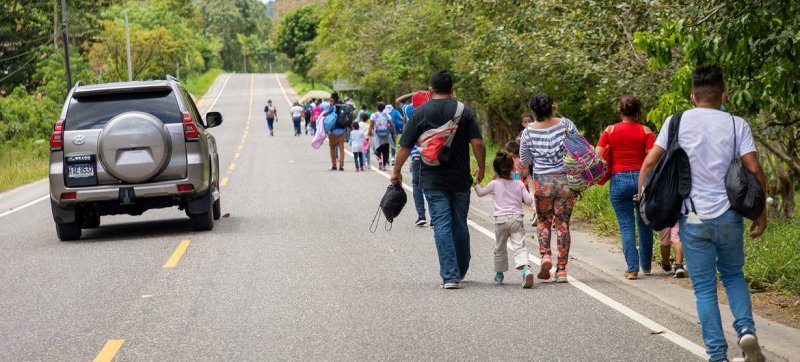
The dramatic deterioration in people’s daily lives has given them little option but to leave their communities and head north, even if it means risking their lives, the WFP official explained.
Communities of particular concern include Haitian migrants who travelled during the COVID-19 pandemic in search of work and shelter in Brazil and Chile.
“All of you are watching caravans, caravans of migrants moving, and before we used to talk about migration happening from the north of Central America, but now, unfortunately, we talk about migration being hemispheric. We have the whole continent on the move.”
Darien Gap danger
One of the clearest signs of people’s desperation is the fact that they are willing to risk their lives crossing the Darien Gap, a particularly arduous and dangerous forest route in Central America that allows access from the south of the continent to the north.
“In 2020, 5,000 people passed by the Darien Gap, migrating from South America into Central America, and you know what, in 2021, 151,000 people passed, and this is 10 days walking through a forest, 10 days through rivers, crossing mountains and people die because this one of most dangerous jungles in the world.”
For these migrants the reason why they are on the move is simple, the WFP official explained: “They are leaving communities where they have lost everything to climate crisis, they have no food security, they have no ability to feed their people and their families.”
UN data indicates that of the 69 economies now experiencing food, energy and financial shocks, 19 are in the Latin America and the Caribbean region.
This has meant that governments which were already doing their utmost to sustain social welfare safety nets during the coronavirus pandemic are now struggling to maintain this level of support to populations.
Support Our Journalism
We cannot do without you.. your contribution supports unbiased journalism
IBNS is not driven by any ism- not wokeism, not racism, not skewed secularism, not hyper right-wing or left liberal ideals, nor by any hardline religious beliefs or hyper nationalism. We want to serve you good old objective news, as they are. We do not judge or preach. We let people decide for themselves. We only try to present factual and well-sourced news.
Support objective journalism for a small contribution.


