


 Ethiopia
Heartbreaking stories from refugees fleeing Ethiopia violence
New York: In a briefing to journalists on Thursday, a senior UN humanitarian official in Sudan recounted moving testimony from refugees who are crossing the border from Ethiopia in their thousands, fleeing fighting in Tigray province.
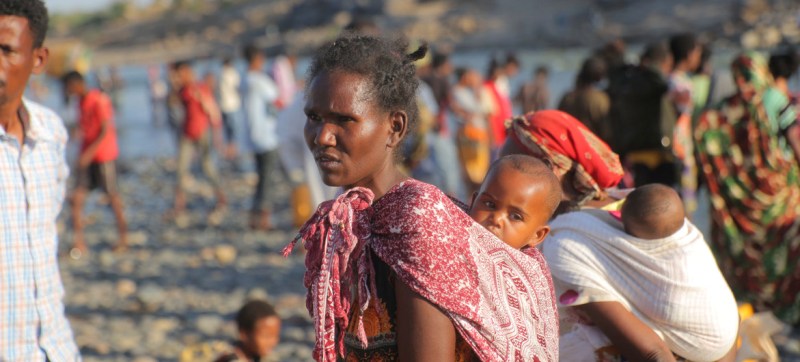
"Many of the refugees left behind children, and parents. They did not have time to assemble their families and leave together", said Babacar Cissé, the UN Resident and Humanitarian Coordinator in Sudan. "They arrived at the camps after having walked for several days, exhausted and with nothing. Seeing families and children sleeping in the open was heartbreaking".
Many of the refugees are young men, who told UN staff that they had been targeted by armed fighters. One man told Mr. Cissé that he had walked for two days, and had seen two family members killed. Another, a medical doctor, said that he had been forced to leave his family behind: he is now treating other refugees in the camp.
Response plan by the weekend
With the influx of refugees higher than expected, the UN in the region is planning for the arrival of some 200,000 over the next six months, said Mr. Cissé.
The UN, donors, and local authorities, are working closely on a response plan, which should be finalized by this weekend, he added. In the meantime, enough food to support 60,000 people for one month is being prepared for delivery from Kassala in the coming days.
"This crisis started on 7 November. After a week, we had about 20,000 and now over 30,000 refugees", Mr. Cisse explained. "People were in reception centres for registration before being relocated in refugee camps. They are not supposed to stay there for more than two days and we are committed to immediately addressing this urgent challenge."
Mr. Cissé was speaking following his return from a two day mission – along with the country representatives of the UN refugee agency (UNHCR), World Food Programme (WFP), UN Childrens’ Fund (UNICEF) and UN Population Fund (UNFPA) – to assess the situation in refugee camps in the southeastern region of Sudan.
So far, the largest number of refugees are entering Sudan at the small town of Hamdayet. During the two-day mission, the UN officials, and Sudanese authorities, visited the Hamdayet Reception Centre, where an emergency response has been set up to register and provide assistance to thousands of women, children and men crossing into the country.
Urgent health needs
The main concern centres around hygiene, as more and more people arrive. At their arrival in the camp, refugees can access clean water and soap, and receive hot meals and high-energy food supplies. More latrines are being built, and WFP has delivered supplies such as cooking pots, tank loads of water, and a mobile storage unit.
Tigray is Ethiopia’s third most-affected region in terms of COVID-19, and there is concern surrounding the movement of people and the risk this entails for the spread of pandemic.
Mr. Cissé warned that refugees are arriving at the camps without any masks or other forms of protection against the virus. Masks are being distributed in the camps but, as of now, there is no capacity for testing.
The most urgent needs are food, clean water, and shelter. The UN and partners are providing health and nutrition services, as well as hygiene and other non-food kits, and are working non-stop to address the needs of the population.
This includes supporting pregnant women, those who are breastfeeding, traumatized children and others who immediately need psychosocial assistance.
Support Our Journalism
We cannot do without you.. your contribution supports unbiased journalism
IBNS is not driven by any ism- not wokeism, not racism, not skewed secularism, not hyper right-wing or left liberal ideals, nor by any hardline religious beliefs or hyper nationalism. We want to serve you good old objective news, as they are. We do not judge or preach. We let people decide for themselves. We only try to present factual and well-sourced news.
Support objective journalism for a small contribution.


