


Global ‘learning crisis’ threatens future of millions young students – World Bank report
Warning of ‘a learning crisis’ in global education, the World Development Report 2018: ‘Learning to Realize Education’s Promise’ said that schooling without learning is not just a wasted development opportunity, but also a great injustice to children and young people worldwide.
“This learning crisis is a moral and economic crisis,” World Bank Group President Jim Yong Kim said in a press release on the report’s launch.
The report argues that without learning, education will fail to deliver on its promise to eliminate extreme poverty and create shared opportunity and prosperity for all. Even after several years in school, millions of children cannot read, write or do basic math.
“When delivered well, education promises young people employment, better earnings, good health, and a life without poverty. For communities, education spurs innovation, strengthens institutions, and fosters social cohesion. But these benefits depend on learning, and schooling without learning is a wasted opportunity. More than that, it’s a great injustice: the children whom societies fail the most are the ones who are most in need of a good education to succeed in life,” underscored Kim.
Learning crisis is widening social gaps, not narrowing them
According to the World Bank, this learning crisis is widening social gaps instead of narrowing them. Young students who are already disadvantaged by poverty, conflict, gender or disability reach young adulthood without even the most basic life skills.
The report recommends concrete policy steps to help developing countries resolve the crisis by using stronger learning assessments as to what works and what doesn’t to guide education decision-making; and mobilizing a strong social movement to push for education changes that champion ‘learning for all.’
While not all developing countries suffer from such extreme learning gaps, many fall far short of levels they aspire to.
Leading international assessments on literacy and numeracy show that the average student in poor countries performs lower than 95 per cent of those in high-income countries. Many high-performing students in middle-income countries – young men and women who achieve in the top quarter of their groups – would rank in the bottom quarter in a wealthier country, explained the World Bank.
The report notes that when countries and their leaders make ‘learning for all’ a national priority, education standards can improve dramatically
The report, which was written by a team directed by World Bank Lead Economists Deon Filmer and Halsey Rogers, identifies what drives these learning shortfalls – not only the ways in which teaching and learning breaks down in too many schools, but also the deeper political forces that cause these problems to persist.
For example, from a war-torn country with very low literacy rates in the 1950s, South Korea achieved universal enrolment by 1995 in high-quality education through secondary school – its young people performed at the highest levels on international learning assessments.
“The only way to make progress is to ‘find truth from facts.’ If we let them, the facts about education reveal a painful truth. For too many children, schooling does not mean learning,” said World Bank Chief Economist Paul Romer.
After extensive consultations with governments, development and research organizations and the private sector in 20 countries, the report offers the three policy recommendations: assess learning, so it can become a measurable goal; make schools work for all children; and mobilize everyone who has a stake in learning.
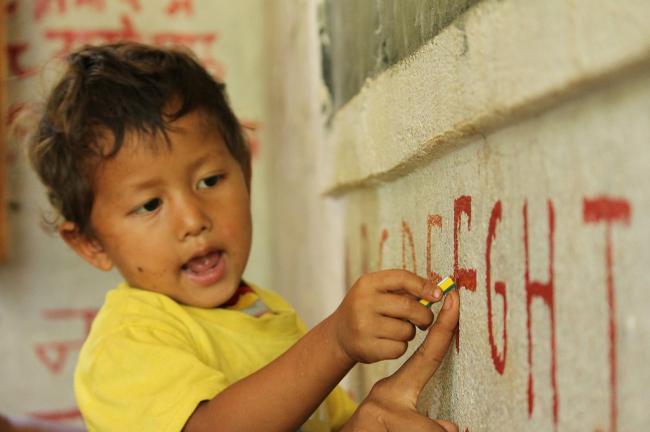
Photo: Aisha Faquir/World Bank
Source: www.justearthnews.com
Support Our Journalism
We cannot do without you.. your contribution supports unbiased journalism
IBNS is not driven by any ism- not wokeism, not racism, not skewed secularism, not hyper right-wing or left liberal ideals, nor by any hardline religious beliefs or hyper nationalism. We want to serve you good old objective news, as they are. We do not judge or preach. We let people decide for themselves. We only try to present factual and well-sourced news.
Support objective journalism for a small contribution.


