


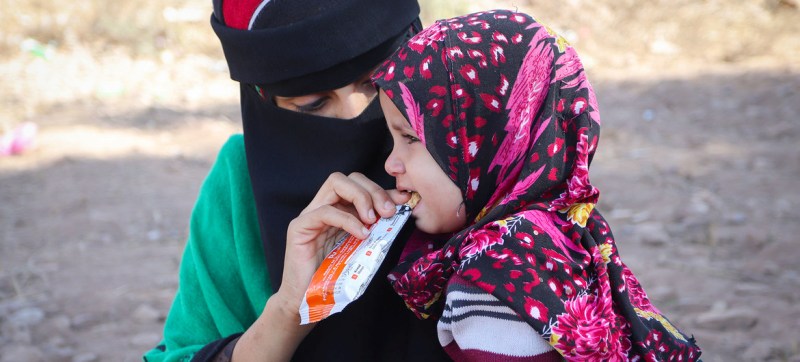
 Famine
Famine risk spikes amid conflict, COVID-19 and funding gaps: WFP
New York: The impact of conflicts old and new, climate shocks and COVID-19, in addition to a lack of funding, have left millions more on the verge of famine than six months ago, the World Food Programme (WFP) said on Friday.
In an appeal for $5 billion “to avoid famine” and support the “biggest operation in its history”, WFP spokesperson Phiri Tomson said that millions of refugees faced “uncertainty and hunger” as the impact of the pandemic on emergency aid budgets became clearer.
“The number of people teetering on the brink of famine has risen from 34 million projected at the beginning of the year, to 41 million projected as of June”, he said. “Without immediate emergency food assistance, they too face starvation, as the slightest shock will push them over the cliff into famine conditions.”
From bad to worse
According to the latest IPC food insecurity assessments - which humanitarians use to assess needs on a scale of one to five – the 41 million “are people who are in IPC phase 4 – emergency”, the WFP spokesperson explained.
New refugee influxes linked to conflict and drought have increased needs for people in “IPC phase 5 – catastrophe” and “that number stands at 584,000 people”, Mr. Phiri continued. “These are people in Ethiopia’s Tigray region, Madagascar, particularly the southern part; South Sudan, especially as we are now at the height of the lean season in that country, and Yemen.”
‘Brutal choices’
Launching its Global Operational Response Plan, the UN agency highlighted operations in no less than eight countries and regions where it has had to make “brutal choices” because of significant funding shortfalls.
In practice, this has meant reduced rations “across east and southern Africa, as well as the Middle East…among some of the world’s most vulnerable people who rely on WFP to survive”, said Mr. Phiri.
“In some cases it’s 40 per cent, in some cases it’s 25 per cent, in some cases it’s 60 per cent…The fact is, the assistance we provide is a basic need, the assistance we provide is just enough to help people get by.”
West and Central Africa in crisis
For many vulnerable aid recipients in West and Central Africa, the COVID-19 pandemic has left them without the opportunity to work to supplement their rations and unable to pay for increasingly expensive staple foods. “Countries like Chad, Niger and Burkina, Mauritania; these are all countries of concern, including Sierra Leone as well,” said Mr. Phiri, after a warning by the UN agency that the world was no longer moving towards Zero Hunger.
“Progress has stalled, reversed, and today, more than 270 million people are estimated to be acutely food insecure or at high risk in 2021,” it said in a statement.
Support Our Journalism
We cannot do without you.. your contribution supports unbiased journalism
IBNS is not driven by any ism- not wokeism, not racism, not skewed secularism, not hyper right-wing or left liberal ideals, nor by any hardline religious beliefs or hyper nationalism. We want to serve you good old objective news, as they are. We do not judge or preach. We let people decide for themselves. We only try to present factual and well-sourced news.
Support objective journalism for a small contribution.


