


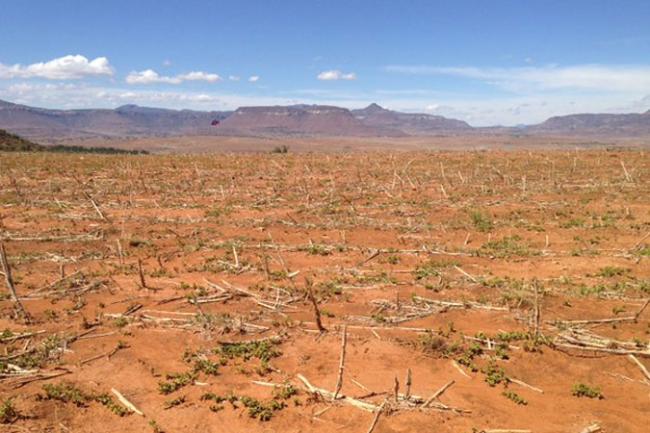
El Niño puts more than 26 million children at risk in Eastern and Southern Africa – UNICEF
“Children face protection risks as families and communities move in search of work, food, water and grazing land for animals. Children are also finding it difficult to stay in school, due to hunger and/or lack of water,” UNICEF noted in a study on the Eastern and Southern Africa region. UNICEF added that it found that more than one million children are in need of treatment for severe acute malnutrition. Moreover, water shortages remain a key concern, with many health facilities and schools in critical need of improved water supplies and sanitation facilities to enable the continuity of services.
El Niño is the term used to describe the warming of the central to eastern tropical Pacific that occurs, on average, every three to seven years. It raises sea surface temperatures and impacts weather systems around the globe so that some places receive more rain while others receive none at all, often in a reversal of their usual weather pattern. In Southern Africa in particular, drought is making life even more precarious for children affected by HIV, according to the UNICEF study.
The UN children’s agency found that governments and partners have been responding since 2015, but the scale of the crisis has outstripped the coping capacities of communities and the resources of the governments in the region, putting decades of development gains at risk.
Urgent investment is still required because the crisis is likely to continue well into 2017, UNICEF said. It could also be further compounded by the coming La Niña, which would bring more erratic weather conditions.
In the first months of 2016, UNICEF said it has reached 155,000 children with treatment for severe acute malnutrition; 2.69 million people with clean water; 82,000 children with protection services; and 100,000 people with HIV education and services.
To provide a comprehensive emergency response, however, UNICEF still needs $127 million of its $226 million goal.
According to the UN Office for the Coordination of Humanitarian Affairs (OCHA), more than 60 million people are expected to be impacted by El Niño’s extreme weather. The humanitarian fallout in certain areas will include increased food insecurity due to low crop yields and rising prices; higher malnutrition rates; devastated livelihoods; and forced displacement.
Photo: FAO
Source: www.justearthnews.com
Support Our Journalism
We cannot do without you.. your contribution supports unbiased journalism
IBNS is not driven by any ism- not wokeism, not racism, not skewed secularism, not hyper right-wing or left liberal ideals, nor by any hardline religious beliefs or hyper nationalism. We want to serve you good old objective news, as they are. We do not judge or preach. We let people decide for themselves. We only try to present factual and well-sourced news.
Support objective journalism for a small contribution.


